Issue 19 -- The School Board Begins Dismantling SOFG
SOFG is going away and committees are back -- but new controversy erupts over board fiscal thresholds.

The Seattle Public Schools board of directors has begun to dismantle the widely disliked Student Outcomes Focused Governance (SOFG) model it adopted earlier this decade. It remains to be seen how thoroughly the board will undo SOFG, but the initial steps have been welcomed by the public.
This week’s board meeting will provide the board another opportunity to roll back a key element of SOFG when they consider lowering thresholds for approving major expenditures.
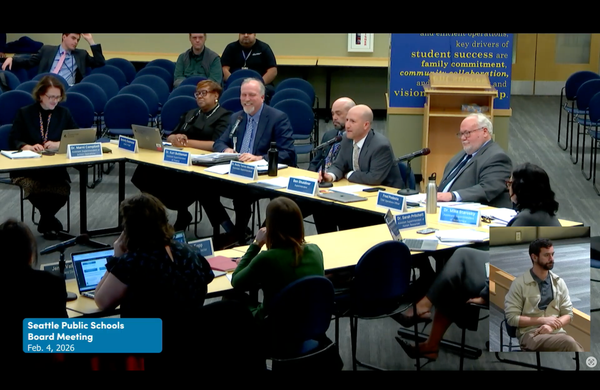
As Julie Letchner recapped here at the Bulletin, last month’s board meeting saw directors vote to restore standing committees that had been eliminated in 2022 as part of the push for SOFG. The new committees will be Finance and Audit, Policy, and Operations. This will allow the board to resume the important work of overseeing the district, developing policies, managing finances, and intervening when problems arise.
The committee assignments are as follows:
Finance and Audit: Vivian Song (chair), Liza Rankin, and Jen LaVallee
Policy: Joe Mizrahi (chair), Liza Rankin, and Kathleen Smith
Operations: Jen LaVallee (chair), Vivian Song, Evan Briggs
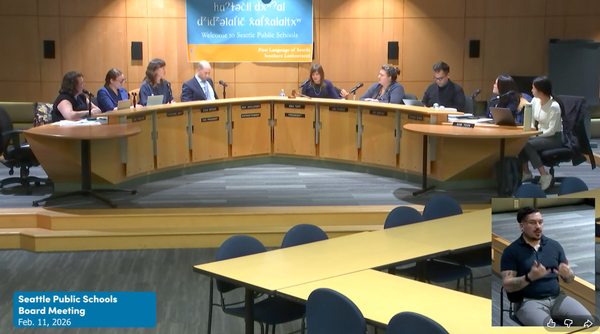
These committees immediately proved their value at the February 11 meeting, helping the board defuse a last-minute amendment from Director Liza Rankin designed to undermine the return of the committees by narrowing their scope. All Together for Seattle Schools mobilized against the amendment, flooding directors’ inboxes with messages against the amendment.
A compromise was brokered in which the proposed amendment was withdrawn from the vote and referred to the new Policy Committee — an entirely appropriate outcome that shows why these committees are so useful.
Directors and the public will now have more time to carefully consider proposals, rather than having them dropped on directors and an unsuspecting public at the last minute with little time to respond or analyze. This in turn helps rebuild public trust, giving school board directors and district leaders an opportunity we hope they will take to show they see the community as partners.
Seattle Welcomes the End of SOFG
As a reminder, the core concept of SOFG is that the school board should focus only on monitoring “student outcomes” in the form of test scores, and leave other matters to the Superintendent. This turns the board into a rubber stamp, as the board is directed to no longer work in depth on budgets, student safety, or other important matters. Under SOFG, the board conducted very little oversight of district operations, including the budget.
Opposition to SOFG erupted across the country. Parents and community members in San Francisco, Pittsburgh, Las Vegas, and St. Paul have organized against SOFG. Candidates for Seattle school board in 2025 pledged to end SOFG in response to community opposition.
The Seattle Times’ Claire Bryan covered the rollback of SOFG in Monday’s paper, and got some good quotes from community members and board directors. The first quote went to The Bulletin’s own Jane Demel:
“SOFG was used as a cudgel to sideline students and families whenever they raised concerns,” said Jane Demel, a parent of two Seattle Public Schools students. “School board directors invoked SOFG to justify refusing to meet with constituents, claiming that community engagement was somehow outside their governance role.”
Bryan also quoted Nancy Bacon, an expert in nonprofit governance, who has raised serious concerns about SOFG:
Nancy Bacon, a Seattle-based nonprofit consultant, educator and parent of two SPS graduates, argues that SOFG is too narrow because it doesn’t account for the board’s obligation to financially manage a large system. Seattle Public Schools is a $1.35-billion enterprise that owns property, has insurance policies and operates a budget where 80% of the budget goes to paying adults, Bacon notes.
“Of course a school system should be focused on student outcomes — that is the purpose and mission — but governance is about making sure that enterprise is sustainable into the long term,” Bacon said. “To just say that you are doing student outcomes as the only determiner of your success is kind of like having a human body and saying we only care about the arm.”
Similarly, Director Mizrahi pointed out that SOFG was too narrowly focused on test scores, to the exclusion of other important outcomes that are just as, if not more, important to students and families:
“You can’t measure student safety — that isn’t an outcome, that is a student feeling,” Mizrahi said. “There are probably proxy things you could measure to find a way to include it, but we don’t have to twist ourselves into pretzels. If we aren’t an SOFG district, we don’t have to find the SOFG way to do it, you can just do it.”
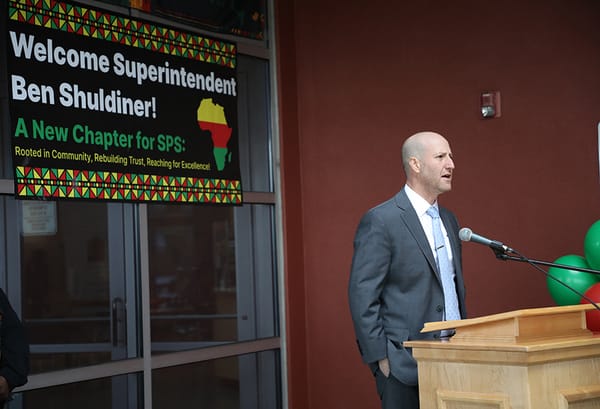
Bryan also interviewed new Superintendent Ben Shuldiner, who felt SOFG was a scapegoat:
“It’s unfortunate that I think governance has become a talking point around one of the reasons why the district hasn’t worked as well as people think. I don’t really blame the governance,” Shuldiner said. “It’s a lot more than just SOFG.”
Here I disagree with Shuldiner. SOFG wasn’t just a talking point. It truly did break the crucial link between the public and their school district leadership. Students, families, and community members would go to the board with serious concerns only to be told the board couldn’t do anything about it, because it was an operational issue and SOFG policies prevented the board from getting involved in operations.
While Shuldiner is certainly correct that SOFG wasn’t the only reason SPS has not been working well, it exacerbated existing problems, and became a substantial barrier to getting those things fixed. Ashley Worobec put it well in Bryan’s article:
“It felt like there wasn’t transparency with parents and it also felt like the school board wasn’t listening to their constituents, the people that voted them in.”
Shuldiner did tell Bryan he is working on new governance proposals to bring to the board that, according to Bryan, “may include budget stability, family satisfaction, safety and security, attendance and chronic absenteeism and extracurriculars.”
Next Steps for Dismantling SOFG
The board will be considering another key step in dismantling SOFG at Wednesday’s board meeting. Director Song has proposed a change to district policy to lower the threshold for board approval of service contracts from $1 million to $500,000, and to raise the threshold for board approval of receiving grants from $250,000 to $500,000.
In 2021 the board raised the threshold for their approval of contracts from $250,000 to $1 million, a change that took place as the district was adopting the larger SOFG framework. Notably, there was no equity analysis done for this change. The higher threshold removed a crucial tool of ensuring proper fiscal control of district operations, enabling district administrators to spend significant sums of money without oversight from the elected board.
As she did with last month’s committee vote, Director Rankin has proposed an amendment that would undermine this new change. Her proposal would keep the threshold for accepting grants at $250,000: “The Board must ensure that such expenditures and influence are in alignment with the priorities and values of our community for the district.”
The amendment also states “The Board has historically approved all grant and gifts that have come for approval.” That raises questions as to why Rankin feels it is necessary to preserve the $250,000 limit. One relevant fact: During her tenure as school board president, Chandra Hampson refused to put PTA grants that were more than $250,000 on meeting agendas, so they were blocked and could never be voted on. Brandon Hersey and Liza Rankin continued that practice during their presidencies.
Some community members have speculated that Rankin’s amendment is intended to block fundraising by school PTAs. If it passes, it will result in PTAs not being able to raise as much as they potentially could to help pay for nurses, reading interventionists, counselors, and social workers. It would also block school communities from raising funds to provide cost-free programs, or scholarships, to students who otherwise could not afford after-school activities, field trips, and more.
The board is expected to vote on both proposals at Wednesday’s meeting, as Song’s proposal was already introduced at last month’s meeting.
What We’re Reading
- SPS Enrollment vs Seattle population aged 5-17 shows declining capture – Over at Reddit’s r/seattlepublicschools forum, Albert Wong brings the data to show that SPS’s enrollment decline isn’t caused by a drop in birth rates. As Seattle’s population grows, so too is its number of school-age children. But SPS is “capturing” fewer of those children, as families look elsewhere to educate their kids. This is an urgent issue for Superintendent Shuldiner and the board to tackle, as recruiting more families to SPS is an existential need for district leaders.
- Superintendent Shuldiner Talks with Sacajawea Parents – The Bulletin’s own Julie Letchner covers the new SPS leader’s meeting with school parents, including the possibility that Shuldiner might try to relaunch a school closure process of some kind. We’ll have more to say about this topic later this month at the Bulletin.
- With rewrite, WA income tax on track to approval – Washington State Standard covers the latest with the “millionaire’s tax” in Olympia. Legislative leaders reached agreement with Governor Bob Ferguson to pass the tax, with a pledge to devote some of its funding to universal free school meals. Education advocates hope that the legislature will use some of the tax revenue to help fund K-12 public school operations.