Part 2 – Inquiry by Design in SPS classrooms: Prioritizing standardization over learning
SPS teachers feel the need to "sneak" in whole books in middle school classes due to a flawed curriculum and overzealous administrators.

by Julie Letchner
This is Part 2 of a four-part series on middle school English instruction at Seattle Public Schools.
“If I taught this curriculum as-is I’d be embarrassed to send my students up to the next grade.”
“What we need for teaching isn’t in here: Structure, examples, and JOY!”
“When I do IBD I’m not meeting the needs of my students.”
“It's not only the worst curriculum I've ever taught, it's the worst I've ever come across in any capacity in almost twenty years as an educator…I feel like I’m failing my students.”
These were the reactions of four SPS educators when I asked them how Inquiry by Design is working in their middle school classrooms.
Teachers at two schools described “sneaking” real education into their classrooms, around the edges of the IBD units they are required to teach. For some, this looks like squeezing in an extracurricular novel, as was done with The Marrow Thieves.
For others, the “sneaking” in of high-quality education looks like adhering to the curriculum but adding extra layers of learning on top, using their own resources and examples. These teachers emphasized the amount of work that this requires from them. They’re glad to have found ways to serve their students, but they’re also frustrated that they have to twist themselves into knots to do so, especially when their efforts must be hidden from administrators.
Why do these teachers feel the need to sneak their best work?
First, they feel like they have to choose between high-quality teaching and rigorous compliance with IBD. Importantly, the teachers I spoke with were not upset by the idea of a standardized curriculum. It’s IBD specifically that falls short for them. Over and over, they described the difficulties of meeting students where they are—a known best practice emphasized in SPS teaching evaluations—with materials that are unengaging, insensitive, and incomplete.
Second, the district’s overemphasis on standardization means that teachers fear (and indeed, receive) reprisals for choosing texts and exercises that deviate from the cookie-cutter IBD materials. They described a culture of surveillance that focuses on superficial signs of curricular adherence, but doesn’t actually evaluate the quality of student learning.
Several teachers even expressed fear for their job security if they were discovered speaking with me about assigning full texts, let alone actually teaching them. They reported several incidents in which teachers were disciplined for teaching full-length texts in the classroom. These teachers all requested that their stories be kept out of this article, for fear that the details would make them identifiable to the district.
Lack of student engagement with the IBD texts was a particularly common refrain. That’s no surprise given the prejudiced depictions of underrepresented groups and the outdated nature of many of the texts. Emily Dickinson poems are the base texts for major evaluations (curriculum embedded assessments, or CEAs, for education nerds) in both sixth and eighth grade!
The students themselves echo this feedback, too. For months, whenever I’ve encountered a middle schooler, I've asked them what they’ve read in their ELA class this year. (Yes, the youths love this and think I’m exceptionally cool for wondering; thanks for asking!)
“I dunno,” and, “Nothing,” are the most common replies from SPS students. Occasionally, I get a book title, like Refugee by Alan Gratz, Shakespeare’s Twelfth Night, Fahrenheit 451 by Ray Bradbury, or (half of) The Marrow Thieves by Cherie Dimaline.
The three private school students I’ve sampled all read at least two books per year in ELA class. The full titles they’ve been taught this academic year include: I’m Still Here (Austin Channing Brown), I Must Betray You (Ruta Sepetys), Herland (Charlotte Perkins Gilman), Alone (Megan E. Freeman), Holes (Louis Sachar), Lord of the Flies (William Golding), The Last Cuentista (Donna Barba Higuera), The House on Mango Street (Sandra Cisneros), All American Boys (Brendan Kiely & Jason Reynolds), and Fahrenheit 451 (Ray Bradbury).
Many of the SPS teachers I spoke with also expressed frustration that turning IBD resources into effective lesson plans requires significant work from them. These educators aren’t work-averse, but all of them felt that the same level of energy could be better spent creating something that truly engages their students.
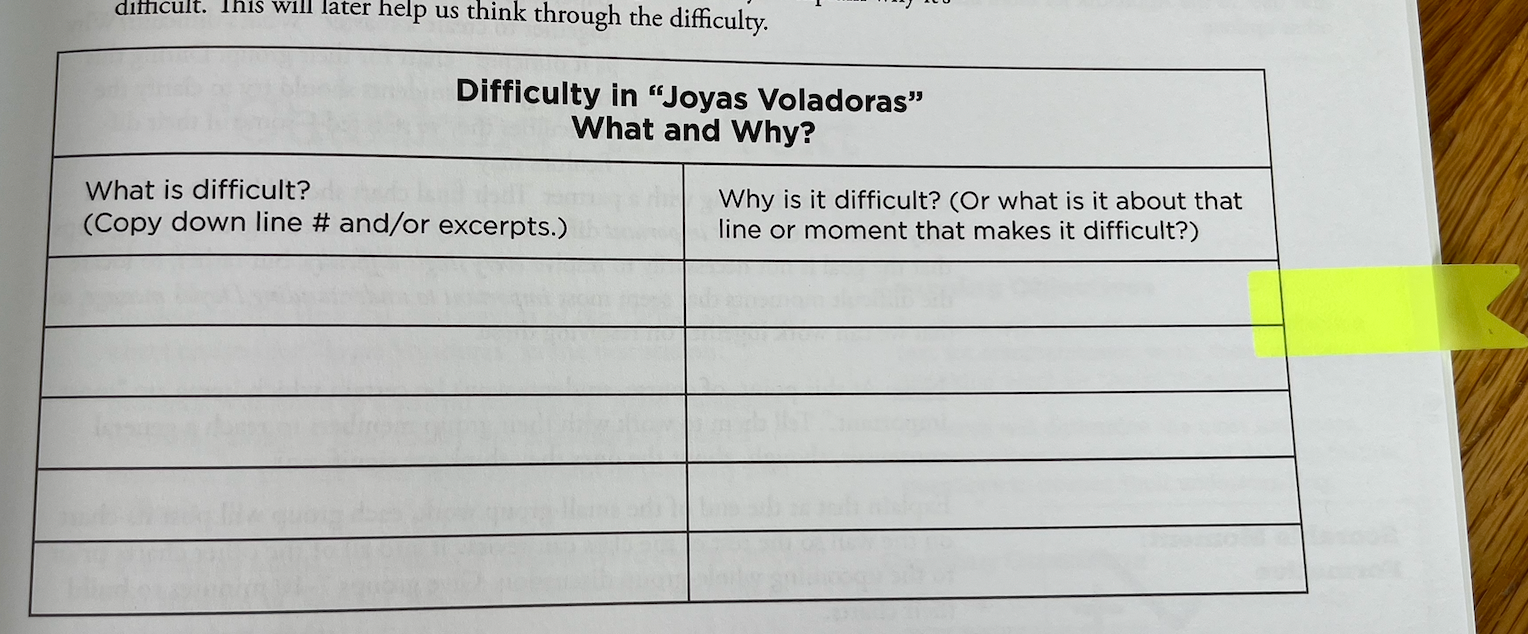
Here are some examples of curricular holes that teachers pointed out:
- A teacher handbook that asks teachers, “Do you have any models or exemplars to work with?”
- A unit titled, “How poems are structured,” containing no materials teaching poetry structure.
- A unit titled, “Investigative report writing,” containing no exercises on investigative report writing.
- Two different units about analyzing advertisements that contain no example ads.
- Repeated vague and confusing questions asked of students. Most notably, “What is difficult?” (One teacher pointed out that she’s trained her whole life to read and write critically, and she has no idea how to answer this question.)
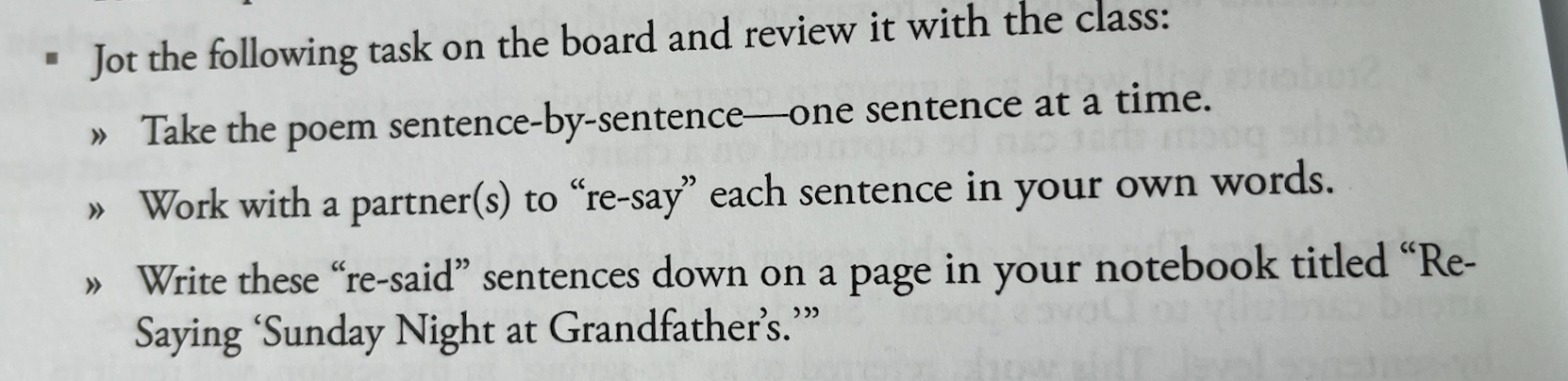
- Instructions using language like “re-say” instead of “restate” or “summarize,” requiring teachers to teach students basic ELA vocabulary on top of the unit at hand.
- An overall lack of structure and scaffolding that makes effective teaching difficult.
- An over-reliance on student group discussions without appropriate teacher support for injecting the context that students need in order for the discussions to be productive.
“And one more thing: Poems aren’t constructed from sentences!” one teacher added, pointing to IBD text telling students to read a poem sentence by sentence. “Why would IBD do this!?”
The short answer, I think, is that it’s another copy/paste error that betrays the lack of effort put into making each unit meaningful.
The substantive answer is that IBD is incorrect. To “re-say” that another way: It’s offering miseducation.
What I heard from teachers, overwhelmingly, was that students are disengaging from unrelatable texts and that teachers are struggling with a curriculum full of holes. Why, then, is the district pushing back against teachers who try to build enriching experiences around culturally sensitive texts?
Let’s return to Hamilton International Middle School, where a pair of seventh-grade teachers was told by the assistant principal to stop teaching The Marrow Thieves mid-read.
In response to parent requests to reinstate the book, the district’s defense of its decision emphasized that adherence to the curriculum is important to standardize the student experience, ensuring that all students have high-quality instruction.
This makes some sense—or, rather, it could make sense, if the official curriculum supported a high-quality learning experience. It’s difficult to see how an allegorical tale about Native boarding schools and violent oppression, written by an Indigenous woman, is less enriching than a movie adaptation of an Arthur Conan Doyle story and an analysis of four magazine ads.
Are Arthur Conan Doyle and advertising campaigns what Caleb Perkins had in mind when he praised IBD for its alignment with SPS values?
That’s not all that doesn’t make sense. Hamilton students confirmed to me that some had read a novel—Fahrenheit 451, a classic—in a different seventh-grade ELA classroom this year.
Why was The Marrow Thieves canceled, but Fahrenheit 451 was allowed?
A parent petition asking the district to grant permission for Hamilton teachers to finish teaching The Marrow Thieves garnered fifty-seven signatures. The petition’s author was referred to four administrators before SPS Literacy Program Manager Kathleen Vasquez finally met with her six weeks later. Vasquez took the opportunity to emphasize the importance of standardization, the fact that IBD was recommended by its field testers during adoption, and that the IBD curriculum is “beloved” by SPS ELA teachers.
Vasquez did not respond to my requests for comment.
I can’t speak for SPS, of course, but “beloved” seems quite a stretch as a descriptor of IBD. Meanwhile, I see plenty of evidence that attempts to over-standardize teaching are resulting in bland, cookie-cutter experiences that leave students and teachers alike frustrated.
As one teacher put it: “[IBD] is lowering my students’ ability to understand how to interact with literature, but it’s also going to lead to a loss of interest in ELA in general. If this is what kids think it means to read and write, of course they’re going to hate English class.”
Clearly, IBD is not achieving high-quality outcomes for either student learning or teacher experience. I can only imagine that the administrators who find themselves monitoring teachers for curriculum compliance would rather be spending their time more productively as well.
With nobody getting what they need from this curriculum, it’s logical to ask: How did we end up here? Join me in Part 3 for a look into how SPS ended up adopting IBD as its official 6-8 ELA curriculum.