Issue 43 -- SPS Scales Back iPad Use in K-2 Classrooms
Supt. Shuldiner announces new limits on student iPad use in early grades. Advocates are hoping it’s just a first step in addressing wider concerns about tech use in school.
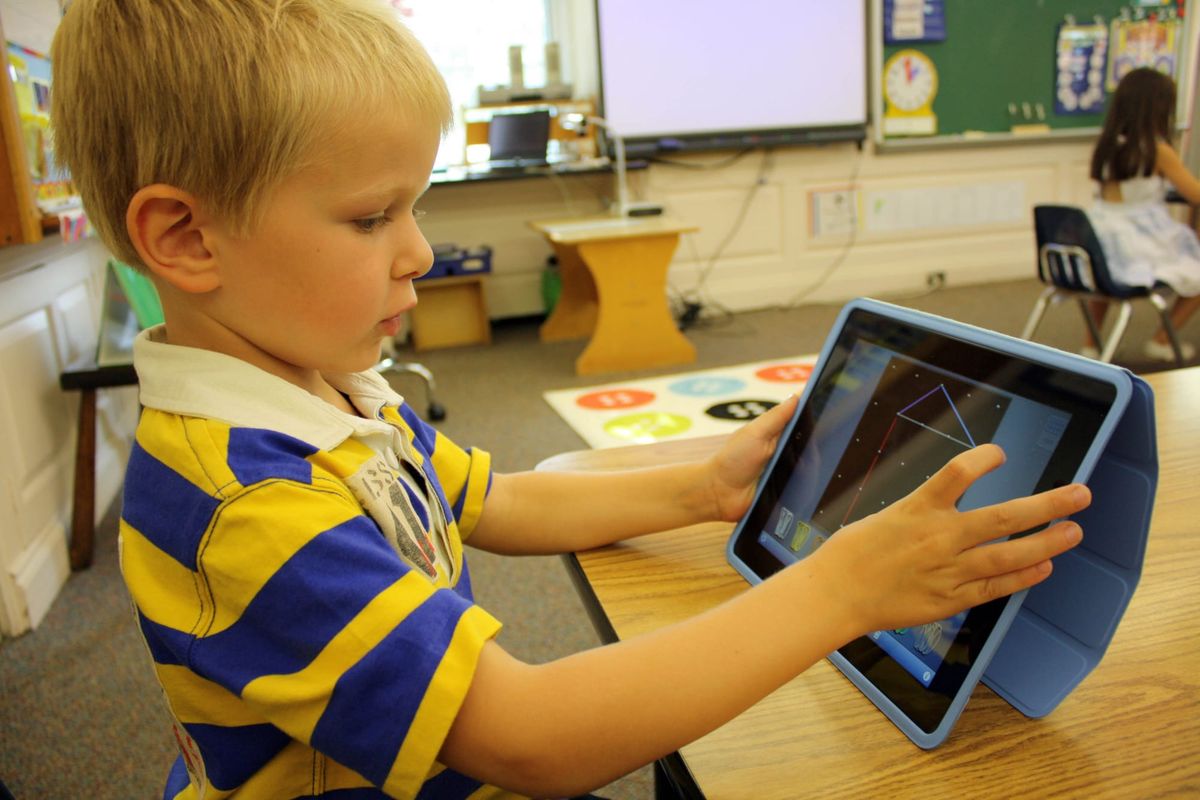
Superintendent Ben Shuldiner announced on Monday that Seattle Public Schools is rolling back its controversial policy of handing out an iPad to every student in kindergarten and 1st and 2nd grades – and imposing additional limits on screen time in those grades. The policies take effect in January.
This comes after months of advocacy by Seattle parents for “intentional tech” policies. It also follows more ambitious and more comprehensive limits adopted by schools in Los Angeles and New York City this year.
Advocates for intentional tech policies urged Shuldiner and SPS to go further. Some also raised concerns about shortcomings of the new K-2 policy. Advocates want the district to address screen use in grades 3-12, and many want screens out of the classroom entirely. They also flagged growing alarm about what appears to be widespread use of Artificial Intelligence in the classroom.
In this issue:
SPS's New K-2 Screen Limits
According to SPS, the core of the new policy is that “K-2 students will no longer be assigned an individual iPad through the 1:1 device model. Instead, iPads will be shared and managed as classroom resources.”
The district says that “Daily technology use will generally range from 0 to 30 minutes” in grades K-2, and that the amount of time may vary based on the lesson and student needs, and technology will not be required every day.”
During the times that students in grades K-2 are not using their iPads, they will instead engage in activities that don’t require screens. This includes things like writing and storytelling, art and creative projects, movement activities, and social emotional learning. The sort of things kids ought to be doing anyway in the classroom.
This is not a total ban on screen use in K-2 classrooms. Much of SPS’s curriculum requires screens, including the controversial new ELA curriculum, Emerge. Testing also requires the use of screens.
Shuldiner adopted this new policy in response to advocacy by Seattle parents, led by Seattle Families for Intentional Tech. We profiled SFIT earlier this year, and these new limits are the first policy change they’ve achieved – though as we’ll show in a moment, they’re pushing SPS to do more.
Schools have been assigning devices to some students for years, but it was during the pandemic earlier this decade that student device use in class soared. Many parents had been appalled to learn that SPS is handing out iPads to young kids, and that kids are allowed to use screens during choice time rather than be directed to pick up a book, or Lego bricks, or colored pencils and art paper.
Seattle is following in the footsteps of public schools in Los Angeles and New York City, which adopted more ambitious and more comprehensive policies earlier this year.
The Los Angeles Unified School District adopted screen time limits for all grades in June, including a total ban on screen time in kindergarten and first grade. Other grades have daily screen time limits that begin at a 20 minute cap in 2nd and 3rd grades, and expand to a 90 minute daily cap in LAUSD high schools.
These limits took effect when students returned to LAUSD classrooms for the current school year, and appear to be having the intended effect:
“One first grade teacher has switched to jigsaw puzzles instead of having her students complete activities on a learning app. A middle school science teacher is considering how to teach Newton’s Third Law of physics with toy cars instead of a video simulation.”
Earlier this month New York City schools adopted policies similar to those of LAUSD – as well as a total ban on generative AI in the classroom.
SPS’s new policy is therefore not nearly as complete as those other districts. Shuldiner did say at a Monday press conference that he would like to see a policy limiting screen time for the older kids “by the second semester” of the current school year.
Intentional Tech Advocates Respond
Representatives of Seattle Families for Intentional Tech were at the Monday press conference to share their support for the new policy. They also made it clear they see this as just the start of changes to tech policy in SPS, and urged Shuldiner to follow the policies adopted in LA and NYC:
“Building on this first step, SFIT would like to see SPS commit to the following quick wins to improve learning outcomes, mental health, and student safety:
• Limit recreational screen time during the school day on both individual student devices and big screens in the classroom (e.g., no cartoons, movies, YouTube videos, or gaming)
• Introduce screen time caps for all grades in SPS, just as LAUSD and NYC have done
• Pause generative AI use for students to give the district time to focus on safety, data privacy, and impact on critical thinking”
Some advocates also pointed out shortcomings of the new policy. Emily Cherkin, the Seattle parent and educator who has become an internationally renowned leader advocating for intentional tech, said the new policy is “not good enough.” She raised concerns that it is “more word salad without substance. The K-2 program may have a new name, but 5 and 6 year olds will still be able to access AI products and YouTube.”
According to Cherkin, “Today a 2nd grade teacher in SPS confirmed that her students can use these very same renamed ‘Non-1:1 devices’ to have ‘AI read the kids a book.’”
Limits on AI were a notable absence from SPS’s announcement this week. Seattle parents and educators have been sharing alarming anecdotes that suggest widespread use of LLMs and generative AI is happening in SPS classrooms. The Bulletin is working on a story on this topic, and if you have any stories you’d like to share, email us at tips@thebulletinsea.org.
How Does This Impact the Classroom?
Many educators have welcomed the new policy, but have also pointed out that tech is now so embedded in instruction that limiting screen time will not be easy.
Over at the r/seattlepublicschools subreddit, several educators raised some specific flags about the implementation of the new policy. One wrote:
“One thing I’d like to highlight is that the new ELA curriculum requires a lot of print outs on top of workbook activities. Schools were not given additional budget to cover this and instead have to scrap together building funds to cover the cost of printing. A lot of schools were leaning on the online activities in the curriculum to blunt the increase in printing but this might not be a workable strategy anymore. Not making a value call on this but want to highlight an outcome.
I can’t teach a curriculum with fidelity if I have a restrictive printing budget on top of restrictive iPad time.”
Others chimed in to say that having to check devices out to students rather than hand them out as 1:1 devices could be hard to manage.
But these seem like solvable problems that are worth resolving for the larger benefits of reducing, and ideally eliminating entirely in the early grades, screen time in the classroom.
Screen use is increasingly being identified as a major culprit behind a precipitous decline in student learning over the last decade. SPS and, soon, Washington State are banning smartphones in the classroom, but the iPads and laptops the district has been handing out to students are themselves a major part of the problem. (Just ask a middle schooler about students gaming in class.)
Hopefully the new policy SPS announced this week is just the first step in the district breaking a long addiction to tech in the classroom, and a shift toward policies that focus on proven, offline learning strategies.