Issue 48 – Shuldiner Proposes Closing 10 SPS Schools
After months of rumor and closed door meetings, the Superintendent unveils his closure plan, rooted in a moral argument rather than data and research.
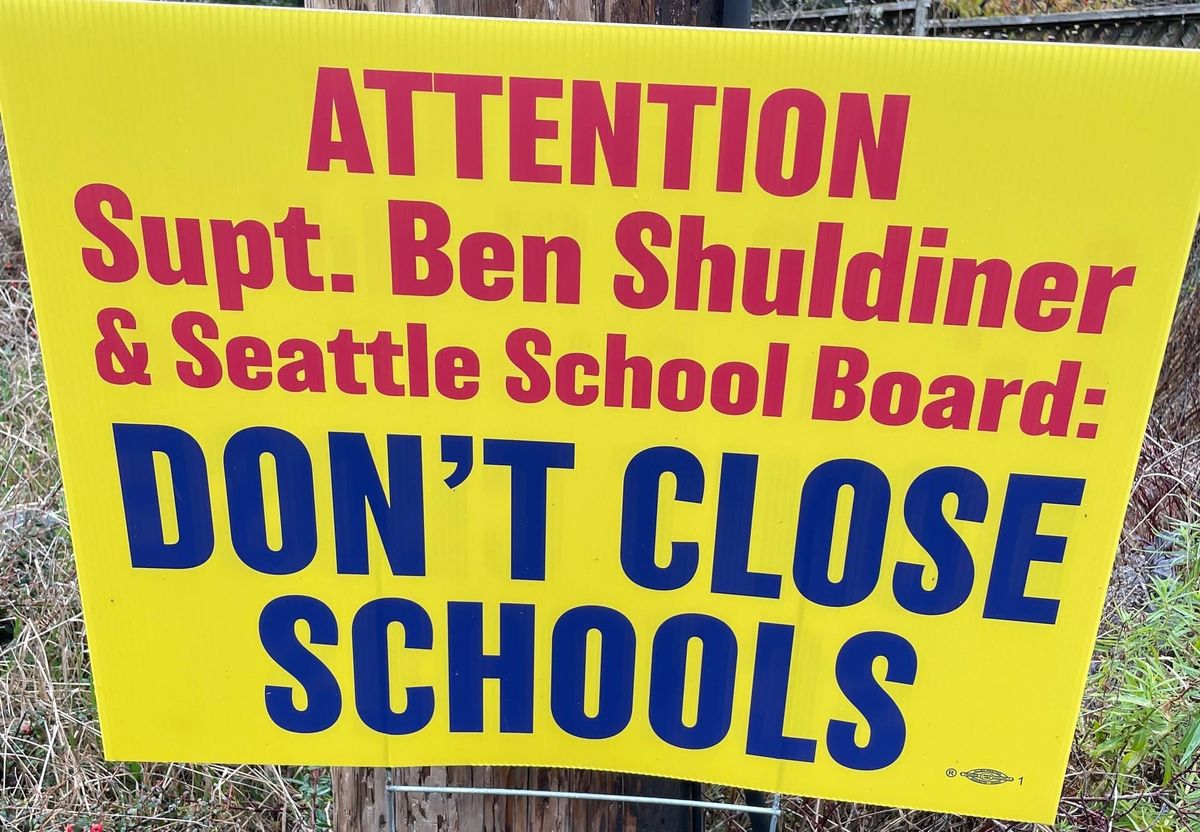
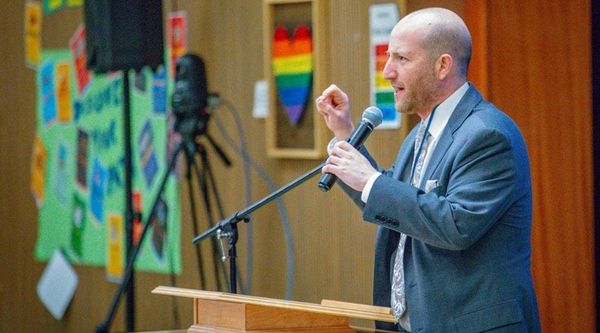
Two years after Seattleites successfully fought off a plan by Seattle Public Schools to close as many as 21 of its schools, the district is going to try again. Superintendent Ben Shuldiner now proposes to close 10 schools, nearly all of them elementary schools, and “merge” them into existing schools.
Shuldiner and SPS leaders have been working on this plan for months behind closed doors, without getting the public’s support to proceed down this path. Shuldiner had been clear since May that he was considering closures, but hadn’t spoken of any detailed plans. Rumors of a possible closure plan have swirled for months, but only in recent weeks did details begin to leak out.
On Friday afternoon, principals at schools that would close or receive students from a closed school emailed parents to invite them to community meetings to discuss the closures, though these emails did not provide details of the merger or provide a rationale for them.
Finally, on Sunday afternoon, Shuldiner confirmed in his weekly newsletter that he was proposing to close schools. He did not mention which schools would be closed in that email, but parents have pieced together the plan, as we describe below. He wrote that he hopes the board will vote on this closure plan by early March.
As with the email from SPS principals, Shuldiner did not explain why closures needed to happen now, or provide reasons rooted in data or research. He didn't say closures were needed to save money or address district finances. Instead, he made a moral argument that invoked Dr. Martin Luther King, Jr.
This process is a stark contrast to how SPS handled its previous mass school closure effort in 2023-24. At that time, the district held numerous public meetings over the course of 2024 before a closure plan was unveiled. The board voted in May 2024 to authorize then-Superintendent Brent Jones to move ahead with developing a closure plan, which was then delivered in September 2024.
None of that is happening this time. Rather than ask Seattleites whether they think schools should close, or ask the board to formally authorize development of a plan, Shuldiner is plowing ahead with a closure plan and making it seem inevitable.
Let’s take a closer look at this proposal, the most dramatic reshaping of SPS since the mass closures that happened 50 years ago.
In this issue:
- The Ten Schools on the Chopping Block
- Shuldiner Invokes MLK to Justify Closures as “the moral thing to do”
- What Do Parents Think?
- What Happens Next?
- An Uncertain Future for SPS
The Ten Schools on the Chopping Block
Shuldiner’s Sunday newsletter was focused on closures. Below we’ll talk about what he said. But it’s worth noting here what he didn’t say in his message: the names of the schools he intends to close and the schools he intends to receive students from the closed schools. He also refused to give that list to the Seattle Times when they asked for it. We do not know why he chooses to hide that information.
Seattle parents have had to piece the list together from the emails principals sent out on Friday afternoon. Here’s what it looks like. The first school listed would be closed, followed by an arrow that points to what would be its “receiving” school:
- Sand Point Elementary → Laurelhurst Elementary
- Sacajawea Elementary → John Rogers Elementary
- Orca K-8 → MLK Jr. Elementary (K-5 students) and Mercer Middle (6-8 students)
- Rainier View Elementary → Rising Star Elementary
- Cedar Park Elementary → James Baldwin Elementary
- Sanislo Elementary → Highland Park Elementary
- John Hay Elementary → Queen Anne Elementary
- Stevens Elementary → Montlake Elementary
- Licton Springs K-8 → Salmon Bay K-8 (building TBD)
- Decatur Elementary → View Ridge Elementary (building TBD)
All but one of the schools proposed for closure here in October 2026 were proposed for closure in September 2024. The difference is that this time, Shuldiner proposes to close Sand Point Elementary, rather than Laurelhurst Elementary.
The proposed closure of Licton Springs K-8 comes after years of SPS leaders working to undermine the school. Although its enrollment has been as high as 230 students, it's currently just 35. In Issue 46 we looked at the history of Licton Springs K-8, how it was movedagainst the community's wishes to Ballard from the Licton Springs neighborhood where it had historic and cultural ties. It's a classic example of how low enrollment is likely caused by SPS's own actions that discouraged more people from enrolling there.
Rather than examine ways to address and revive enrollment at the district's only Native-focused school, Shuldiner has opted instead to propose closing it.
In the case of the Decatur-View Ridge Merger and the Licton Springs-Salmon Bay mergers, SPS has not determined which the building the merged schools would use. Licton Springs K-8 is currently housed in the newly renovated Webster building in Ballard. Salmon Bay K-8 has been in the James Monroe building in Ballard for decades, which hasn’t been renovated. Only the James Monroe building would hold the combined enrollment of both schools, raising questions about what would be done with the Webster building.
Three of the schools to be closed are option schools: Cedar Park, Licton Springs K-8, and Orca K-8. Two other schools to be closed are Highly Capable Cohort schools: Decatur and Rainier View. Of the “receiving schools,” Queen Anne Elementary is currently an option school. Orca K-8 would be split into a K-5 (and sent to MLK Jr) and a 6-8 (and sent to Meany).
Overall, this proposal closely resembles the scaled-down closure plan from October 2024, but on a bigger scale. After SPS proposed to close between 16 and 21 schools in September 2024, strong pushback led district leaders to scale their proposal back to close four schools: North Beach, Sacajawea, Stevens, and Sanislo. Those plans involved merging the four schools into receiving schools, without redrawing boundaries.
Public opposition led SPS to abandon those plans too, though many suspected closure plans were merely being placed on hold. Those suspicions have now been proved correct, though North Beach is not slated for closure this time.
Shuldiner Invokes MLK to Justify Closures as “the moral thing to do”
Let’s now turn to what Shuldiner said in his Sunday newsletter. Rather than make a case rooted in data or research, which overwhelmingly demonstrates closures do not save money and instead harm student learning, the Superintendent instead invoked Dr. Martin Luther King, Jr. and claimed closures were “the moral thing to do.”
Shuldiner opened his email by pointing out SPS’s enrollment in 1964 was over 94,000, but is now below 50,000. But this is a disingenuous comparison.
After the baby boom ended and SPS closed numerous schools by the early 1980s, enrollment stabilized at 43,500 in 1984. Enrollment grew slowly since then, rising to 47,000 in 2011. The 2010s boom caused SPS enrollment to swell, peaking in 2019-20 at 52,198. Since then enrollment has shrunk to 47,196. Most of that decline happened in the early 2020s.
In other words, SPS enrollment has been relatively stable over the last 40 years.
Further, unlike other cities in the country, Seattle isn’t losing kids. It’s SPS that’s losing kids, as its “capture rate” – the percentage of school-age kids who enroll in the district – has shrunk. The “capture rate” for kindergarten shrunk dramatically over the last ten years, from 66% in 2015-16 to just 55% in 2025-26. SPS’s enrollment is going down because families are opting out of our public schools, not because families are opting out of living in Seattle.
Shuldiner didn’t acknowledge this directly. But he did say in his email that, in the past, “Decisions seemed to be made in direct opposition to the expressed needs of our community.” Yet the decision to propose closing 10 schools runs counter to the needs of the community as expressed in the widespread opposition to closures in 2024.
Whereas in 2024 the school board at least voted to authorize the superintendent to proceed with developing a closure plan, no such vote has taken place in 2026.
Shuldiner then rattled off a litany of dire conditions that certainly exist in some SPS buildings, including grade splits as well as physical disrepair:
“Some students were in beautiful buildings with bright, airy, light-filled classrooms, while others spent their days in buildings without interior walls, traipsing through poorly lit hallways and hearing the scurry of much smaller beings in the rafters.”
“Buildings without interior walls” is almost certainly a reference to Sanislo Elementary School in West Seattle, which has an aging building that dates to 1970 and was built during the “classrooms without walls” fad. Sanislo families have argued that their school suffers from deliberate neglect and underinvestment from SPS, driving families away and setting it up for closure.
Sanislo is not the only open plan building in SPS. Green Lake Elementary School has a similar design. In 2024 it was listed for closure, raising alarms in particular among the families of students in the school’s medically fragile program. Shuldiner’s comments about these kinds of schools, and his failure to list schools he proposes to close, caused significant concern among Green Lake Elementary families on Sunday evening after receiving his email.
As far as The Bulletin is aware, Shuldiner is not currently proposing to close Green Lake Elementary.
He then invoked MLK and made a moral argument for closures:
“In times like these I often think of the Dr. Martin Luther King quote, ‘We are now faced with the fact that tomorrow is today. We are confronted with the fierce urgency of now. This is the time for vigorous and positive action.’
I don’t want students to spend one more year in a building where bookcases serve as walls, if we don’t have to. I don’t want students to spend one more year in a sixth-seventh-eighth grade split if we don’t have to. I don’t want teachers to be the only teacher in the grade if we don’t have to. I don’t want to accept large class sizes if we don’t have to. So, the conversation around school mergers begins.”
MLK led several protests to desegregate schools, including in Washington, D.C., Chicago, and Boston. There does not appear to be any evidence of him supporting the closing of public schools.
Notably, Shuldiner does not explain how or why closing schools will address the problems he laid out in his newsletter. He did not share how SPS would address building maintenance at the remaining schools, many of which still need renovation. He did not demonstrate how closures would end grade splits, which are driven by the district’s cumbersome Weighted Staffing Standard and not by school size. Nor did he show how closing schools would shrink class sizes, especially since he did not present any evidence that closures would free up money that could be used to fund smaller class sizes.
Also missing from Shuldiner’s email was any explanation of how the process of closures and mergers would work, only that it would happen. Nor did he explain what would happen to closed buildings. In Washington State, state law gives charter schools the right of first refusal to rent or buy a closed building.
Shuldiner’s arguments for closing schools resemble those used by Chicago Mayor Rahm Emanuel in 2013 when he closed 50 public schools. Research in the following years has demonstrated that these closures were disastrous. Chicago Public Schools is worse off financially, with lower enrollment. Students experienced years of worse academic outcomes – including students whose schools closed and students whose schools stayed open.
Communities whose schools closed were devastated. Research shows gun violence spiked near school buildings closed in Chicago.
Seattle is unfortunately poised to repeat Chicago’s mistake, and without having laid out a solid, evidence-based reason for doing so.
What Do Parents Think?
In 2024, opposition to closures was widespread. A poll funded partly by Washington Families for Public Education, a PAC that I co-founded, and conducted by the Northwest Progressive Institute found that twice as many Seattleites opposed closing schools (54%) as supported the closures (27%). Opposition was strongest in central and south Seattle.
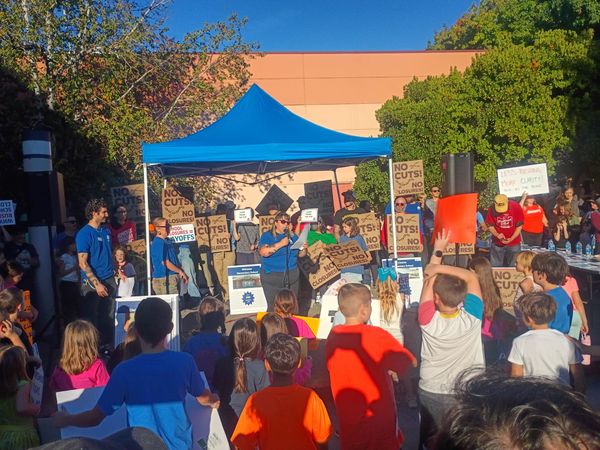
Resistance to school closures is re-emerging in 2026. Several SPS parents have organized a new website, Save Seattle Schools, to publish information making the case against closures.
Many at the targeted schools are planning to fight the proposed closure, including Licton Springs K-8. Friends of Salmon Bay (FOSB), the parent-teacher organization for Salmon Bay K-8, stands with them.
Yet there are differences in public opinion between 2024 and 2026. Some families at the schools slated for closure are now supportive – though in many cases, it’s out of resignation and exhaustion from years of SPS neglecting their school's needs.
KUOW’s Noel Gasca spoke to some of those parents for her story this week, including Julie Letchner. Letchner, a Sacajawea parent who wrote an excellent overview of the possible impact of closures, told KUOW she’s focused on what happens to students after their school closes:
“‘Overall, the community is sort of resigned to a closure,’ Letchner said. ‘Now, what we’re not resigned to is the version of closure that we’re getting, which is a merger into John Rogers.’
Letchner said John Rogers Elementary is too far away for many families who currently send their kids to Sacajawea, and many parents of children in special education are concerned John Rogers lacks the educational support their children need.”
Letchner added her concerns that the closed Sacajawea building could fall into disrepair, as did half of the schools Chicago closed in 2013.
No school community has a unified view, and other parents remain strongly opposed to closing schools. Annie Becker, a parent at Sacajawea, told The Bulletin her reasons for fighting the new closure plan:
“Ben Shuldiner walked into our district saying he would build a district families would enroll their kindergartners in. Then he admitted the district’s own closure threats drove families out — and now he’s using the empty seats as circular reasoning to close the same schools.
I oppose closures because they’re the one cut that drives more families (and funding) away. We know what closures do because cities before us have ran the experiment, and the results are lower test scores, less resources, with the hardest hits landing on Black, brown and low-income families. At Sacajawea the hardest hit will be the children with disabilities placed here because this school was built for them. Our neighborhood schools are worth saving.”
Some Seattle parents told KUOW they openly welcomed closure:
“Jessica Jones, co-president of the Orca K-8 Parent Teacher Student Association, said the school “absolutely expected” the merger announcement, and the PTSA board met with Shuldiner last school year to talk about the issues the school has faced.
‘We [told] him at that meeting that we are open to a merger, and even talked to him about which school we thought would be the best fit,’ Jones said. ‘We’re not blind to the struggles of the district.’”
It’s clear that closure opponents will need to overcome not only district leaders, but a sense of defeat among some parents after years of SPS neglecting their school communities.
What Happens Next?
Shuldiner made some important announcements in his newsletter about the process going forward. Here’s the timeline he laid out:
- Senior Leadership meetings – First two weeks in September
- Principal meetings – September and October
- Staff meetings – October and November
- Family meetings – November and December
- Community meetings/public hearings – January and February
- Board possible action – Late February or early March
Because that board action comes after the current choice application deadline, Shuldiner said SPS will extend the choice application deadline to one week after board action on closures.
Shuldiner also added that “if you are transferring from a school being closed, you will get priority this year, during open enrollment, over families who want to transfer but are not impacted by mergers.”
Reportedly, the board will vote on each closure individually, rather than all at once. This would likely incentivize school communities to look out for themselves instead of standing in solidarity and opposing all closures.
An Uncertain Future for SPS
Shuldiner pledged in his newsletter that “if your school has not received an invite, we are not considering a closure now and will not in the near future.” But he also added “what I cannot promise is that these are all the mergers or program shifts we will ever do.”
The revival of school closures throws the future of SPS into deep uncertainty. Even the schools not slated for closure cannot rest easy. If SPS succeeds with these closures, it will open the way for more closures in the years to come. It would also send a signal that the community cannot, or will not, successfully fight back, potentially enabling larger eliminations of options and choice programs.
It’s difficult to see how a round of school closures will help grow SPS’s enrollment. Instead, the opposite is likely to happen: families leave the district rather than see their schools close and have to send their students a mile or more to a receiving school. Chicago’s enrollment fell after it closed schools. SPS’s enrollment will likely shrink too. That in turn would worsen district finances.
In a recent issue The Bulletin called for SPS to engage in a holistic process of examining enrollment, programs, building use, and school boundaries, with the aim of growing enrollment and providing options within the public system – with closures becoming one of many possible outcomes of such a process.
Instead, SPS has decided to proceed with closures and not do the other suggested work. The district is also doing this behind closed doors, rather than treat the public as full partners in a truly collaborative, open process.
The message SPS is sending to the public is that district leaders alone will decide the future of our public institutions and our students’ education, and that we will sometimes be consulted – but only if the district feels like it. Many of us hoped for change and collaboration after years of top-down mismanagement. We hoped for a focus on supporting all our schools and growing our enrollment. SPS leaders are now choosing a different course.