Issue 31 -- Will Ben Shuldiner Revive School Closures?
The Superintendent revives closure worries, takes on the state’s levy cap, and gets a letter from SEA sharing concerns about Anitra Jones.
Three quick updates from Seattle Public Schools this week. In this issue:
- Superintendent Ben Shuldiner revives school closure worries
- Shuldiner takes on the state’s levy cap
- SEA writes to criticize placement of Anitra Jones
Superintendent Ben Shuldiner revives school closure worries
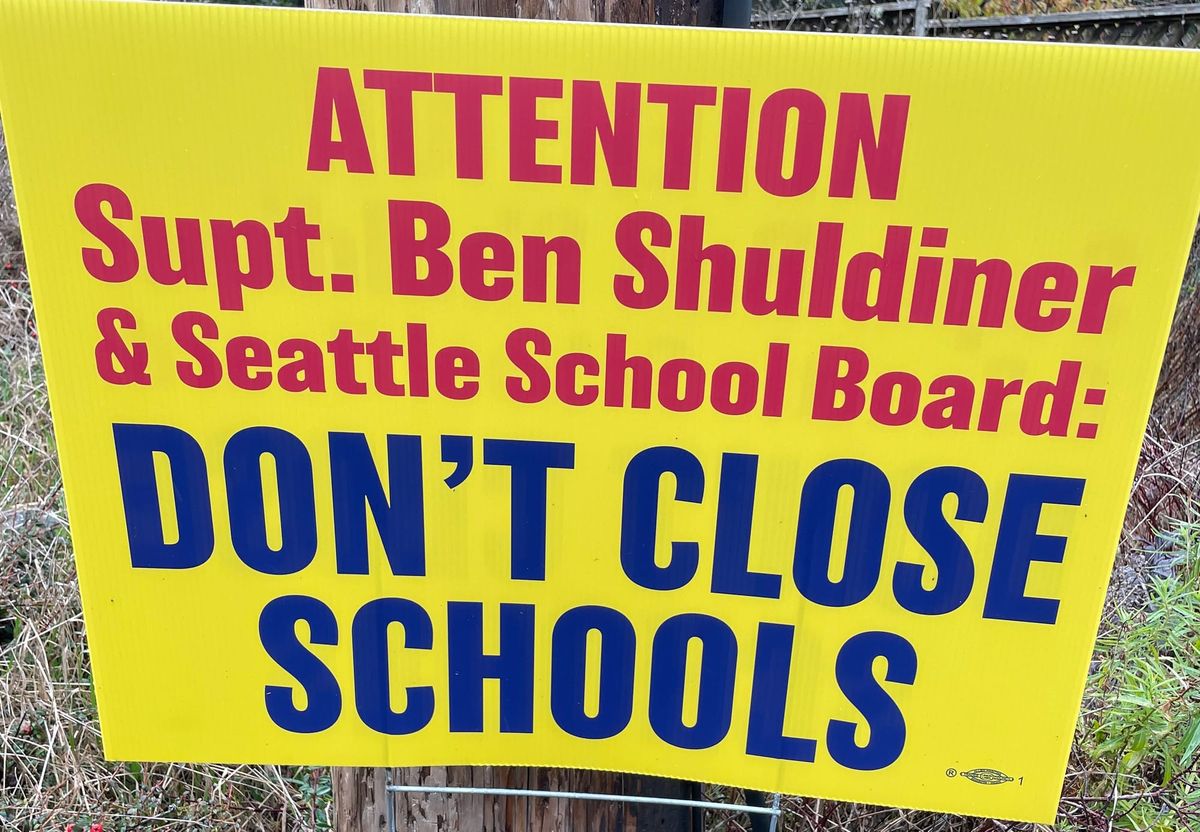
You’ve probably seen the yellow yard signs with red lettering – “Supt. Shuldiner, Don’t Close Schools!” – and wondered if the new Superintendent was planning to revive the school closure plan Seattle residents successfully blocked in 2024.
The answer is…maybe.
In an interview with KUOW’s Soundside on Thursday, Shuldiner said he was open to closing schools:
“‘We are in a budget crisis, and we have to be thoughtful about every dollar that we spend,” he said. ‘You wouldn’t want a superintendent to say, ‘Oh yeah, we need to save a bunch of money, but we’re not going to do this thing.’’
Pointing to other major urban school districts across the U.S. who already have or are considering closing schools, Shuldiner said ‘there are some real reasons’ to make such changes.”
Shuldiner does not currently have any firm or specific closure plans. He told KUOW there were two big problems with the 2024 closure effort. First, SPS put out a list of schools to close “by fiat” and that SPS was not “open, transparent, or even collaborative around these things.”
Second, Shuldiner argued that closures aren’t really about the budget at all, and should be framed as bringing more resources to schools:
“‘It’s not really about budget,’ he said. ‘It’s about what’s best for kids and teachers.’
To Shuldiner, it’s more of a resource issue — something he believes more than ever that Seattle could benefit from evaluating, now that he’s visited all 106 of the district’s schools.”
But this was exactly how SPS leaders tried to sell the mass school closure plan in 2024. As early as February 2023, Fred Podesta was explaining that closing schools wasn’t about saving money. Superintendent Brent Jones and then-Board President Liza Rankin told families that closing schools would somehow create more resources for the remaining schools. Parent advocates showed that closures wouldn’t actually save much money and any savings that were realized would simply go to paying down the budget deficit.
Seattleites strongly rejected SPS's arguments in 2024, and polling showed large majorities opposed closing schools. There’s no evidence that public sentiment has changed.
There’s also an apparent contradiction in Shuldiner’s own words. As quoted above, he told KUOW, “We are in a budget crisis, and we have to be thoughtful about every dollar that we spend.” But then he said closures are “not really about budget.”
Nearly 20 years of research has demonstrated that closing schools does not improve school district finances. Nor does it improve student learning. Research from Chicago, San Antonio, and other schools found lasting harm to students whose schools were closed.
Shuldiner did not address these concerns in the KUOW interview.
Shuldiner takes on the state’s levy cap
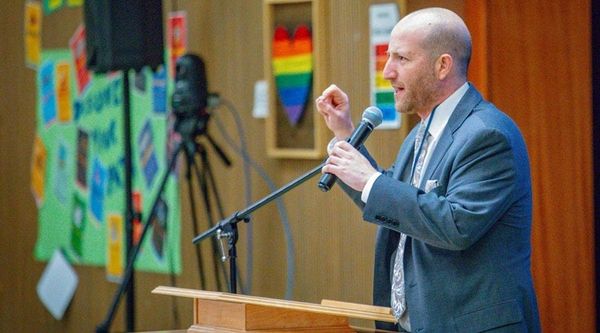
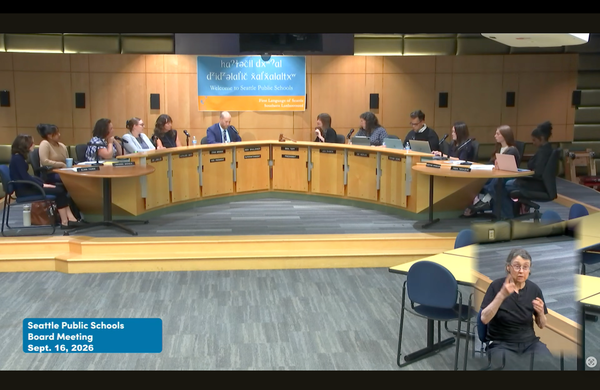
At Wednesday’s school board meeting, Shuldiner made some notable comments prior to public testimony about the need to lift the “levy cap” that the state legislature imposed on school districts as part of their 2017 solution to the McCleary decision.
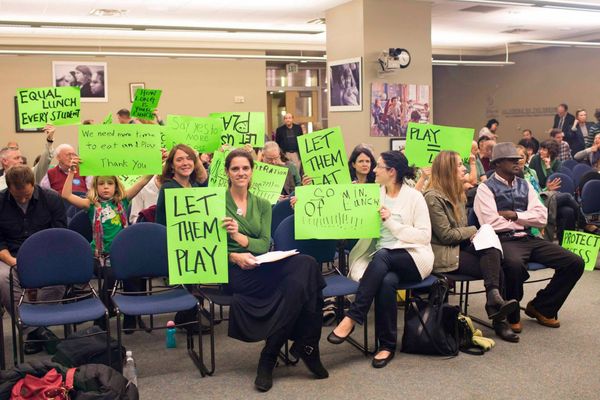
As he did before Adams Elementary School parents gave public comment at an April board meeting, Shuldiner preemptively addressed that a majority of the members of the public signed up to give testimony that evening were teachers and students who were speaking out against budget cuts and layoffs of student-facing staff.
At last week’s board meeting, Shuldiner argued SPS’s budget woes were caused by the district spending beyond state ratios. This week, Shuldiner argued – correctly – that the solution lies in Olympia. He specifically called out the state legislature’s cap on local school levies, limiting the amount communities can tax themselves to fund their own schools:
Supt. Shuldiner speaks about levy caps. Via SPS TV
“There is a cap on the amount of money that the city can give us because of the way that funding works for the state.
Think about how crazy that is.
The wonderful people of Seattle want to actually give us more money so that we can employ wonderful people, but yet we're not allowed to because of this cap that happens in the state.
I want people to listen to the stories, the narratives, the faces, the names that you're going to hear.
But I ask that we together also focus on a solution. And one very good, very strong, very thoughtful one is to help us get this cap removed.
Because if that cap gets removed, the district will in fact almost immediately get more money that we can spend.”
Shuldiner went on to call on people to push Olympia to lift the cap:
“There are things that are true in Washington that are not necessarily true in other states. The great people of Seattle have already authorized money to be sent to the school system, but there are rules in the state that do not allow it.
So I ask that everybody here today and your friends and your family and bring your dog. We've got to figure out a way to get the people in Olympia to allow us to take the money that is already given to us by the wonderful people of Seattle.”
The levy caps he described stem from the way legislators addressed the state Supreme Court’s order in the McCleary decision. Rather than pass a capital gains tax, legislators opted to adopt Republican candidate for governor Rob McKenna’s proposal of a “levy swap.” In effect, local property tax revenue was taken by the state, and then returned to districts to cover some of the costs of basic education.
In exchange for enacting the largest property tax increase in Washington State history, legislators capped the amount districts could raise in local property tax levies. Voters in Seattle and Bellevue have authorized schools to collect more in property tax than the state will let them receive.
Shuldiner’s push is potentially controversial. There are two justifications used for the existence of this levy cap: the public reason, and the real reason.
The public reason: Allowing Seattle voters to spend as much as they want to on their own public schools could create an inequity with districts whose voters cannot or will not do the same. Superintendents from outside the Puget Sound region have made this argument in opposing efforts by Puget Sound school districts to raise or eliminate the levy cap.
But an equity argument can also be made in support of removal of the levy cap.
In this view, the levy caps penalize Seattle students with the greatest needs. While SPS is a “wealthy district” as a whole, many families, neighborhoods, and school communities in Seattle are poor. If SPS’s levy cap is eliminated, that means people with more valuable property in Seattle can fund expansive services in schools in Seattle neighborhoods where poverty rates are higher. It could eliminate any need for PTA funding, and shower resources on students who need it the most, major steps toward equitable education.
However one views the equity argument, there’s still the real reason these caps exist: The large corporations who own valuable property in the state’s bluest cities lobby legislators in support of capping school levies.
Boeing, Amazon, Microsoft, and other big businesses own lots of property in the Seattle, Everett, Bellevue, and Lake Washington school districts. (The Lake Washington district includes Redmond and Kirkland.) If school district levies in those districts were raised or uncapped, their deeply blue and strongly pro-tax voters would surely raise those levies, meaning those large corporations would pay higher taxes. So those corporations work to keep those caps in place.
If Shuldiner is serious about raising or eliminating the levy caps, he’ll have to convince – or overcome – some of Seattle’s largest employers.
SEA writes to criticize placement of Anitra Jones
On Tuesday, the Seattle Education Association (SEA) sent a letter to Shuldiner about their “great concern” over his decision to appoint Anitra Jones as the new principal at Adams Elementary School. We provided background on the concerns raised in 2024 about Jones in Issue 25, and covered SPS leaders rallying around Jones in Issue 26.
SEA’s letter has three main points:
- SEA says it is “deeply concerned” that SPS leaders did not act on numerous complaints about Jones while she was principal at Rainier View Elementary School.
- SPS asks for “an investigation into the failure of SPS leaders to investigate and address with fidelity” those complaints made by Rainier View staff and parents.
- SEA asks that SPS make public the internal document supposedly signed by previous Superintendent Brent Jones promising a principal appointment to Anitra Jones (no relation), so as to assess its “legal viability and authenticity.” They also ask “that it be confirmed that this internal document was actually approved and signed by former superintendent Brent Jones.”
SPS has not provided any public reply to this letter as of Saturday morning.
Shuldiner did tell the Seattle Times this week that he plans to change his approach to principal placements:
“Going forward, Shuldiner said he won’t place principals via appointment. ‘Everybody — and I mean everybody — has to apply for their job,’ he said.”
That’s cold comfort for Adams Elementary, where Anitra Jones begins as principal on Monday.