Issue 45 – The Yellow School Buses Will Keep Rolling
Drivers and management reach an agreement to avert a school bus strike, and Governor Bob Ferguson shares more details about his proposed statewide ban on smart devices in schools.
In this issue:
- Zūm and Teamsters Settle
- Ferguson Details Proposed Statewide School Smart Device Ban
- Notes from the First Superintendent Community Meeting
Zūm and Teamsters Settle
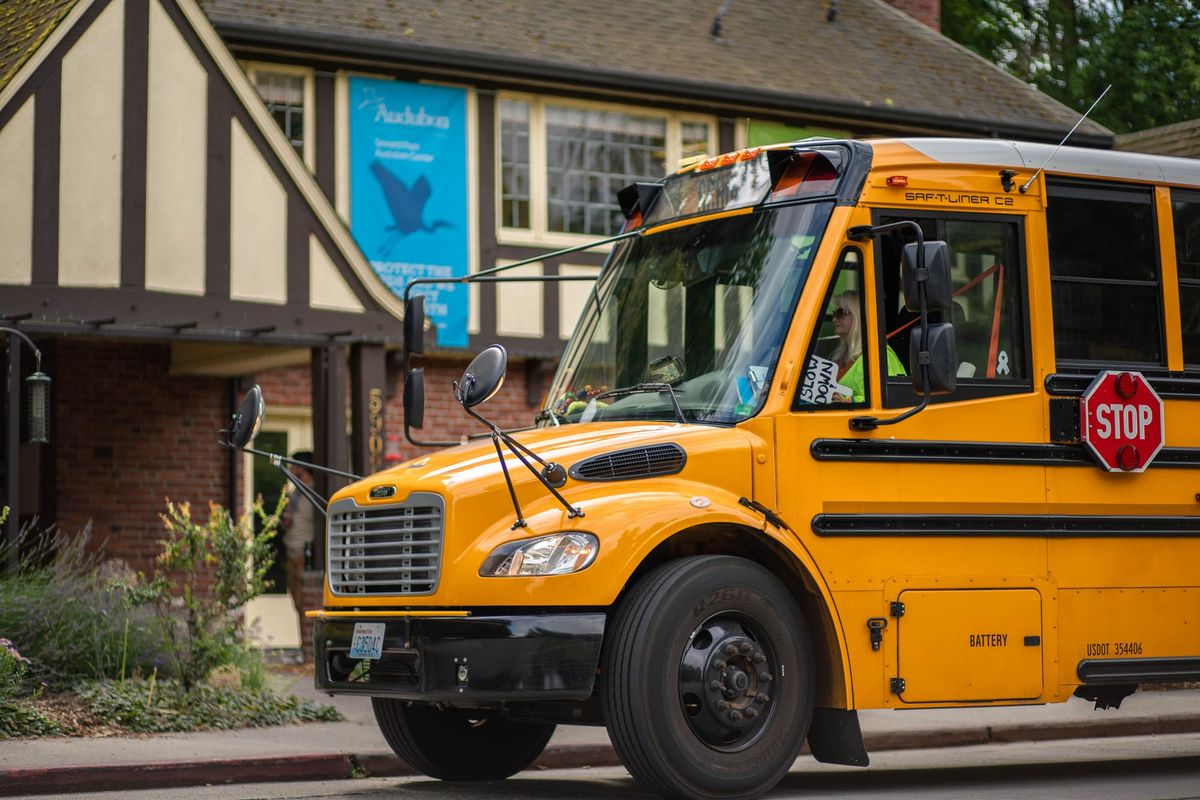
On Friday afternoon Teamsters 174, the union that represents school bus drivers in Seattle, announced they had reached a tentative agreement with Zūm Transportation, the company that provides yellow school bus service to roughly 80% of Seattle Public Schools.
Neither side provided details of the agreement, which as we reported last week had been held up by a dispute over retirement benefits. But they did issue statements welcoming the outcome:
“Throughout the negotiations, both sides engaged productively and in good faith, strengthening our collaborative relationship,” Zum said. “We are united in our commitment to supporting our incredible drivers and delivering safe, reliable student mobility for Seattle families every school day.”
“This deal represents a victory for both sides,” said Teamsters Local 174 Secretary-Treasurer Rick Hicks. “We are all thrilled that a strike was averted, as we all understand how important school bus service is to families in the Seattle School District. A suspension of school bus service would disproportionately affect working class families who do not have alternative means of transporting their children to school, so both sides worked hard to avoid that outcome and we are thrilled to announce that our efforts have been successful.”
Drivers will vote on whether to ratify the agreement on October 10, and approval is likely. This averts a possible strike that could have disrupted bus service for students across Seattle.
Ferguson Details Proposed Statewide School Smart Device Ban
Governor Bob Ferguson came to Seattle’s Robert Eagle Staff Middle School earlier this year to announce plans to propose a statewide ban on smartphones in public schools. At the time the Governor’s Office said that he and his team would spend the next few months traveling the state to talk to students, parents, and teachers about the details of how a ban would work.
He has done that, and at Spokane’s Lewis and Clark High School on Friday he shared a more detailed proposal that came out of that process. According to the Seattle Times’ Dahlia Bazzaz, it would be an “away for the day” policy:
“The draft legislation, which Ferguson plans to send to lawmakers when they convene in January, would apply to smartphones and smartwatches. If passed as law, schools would decide whether students would turn phones in, place them in pouches or use another storage system….
Ferguson’s proposal would give schools latitude over enforcement, particularly as students adjust to the new rules. He said suspensions would not be levied against students for violating the cellphone policy during its first year.”
This, as we noted earlier this year, would be stricter than the policy SPS Superintendent Ben Shuldiner announced in May. That policy, which does not cover smartwatches, requires students to keep their phones away in class but allows high school students to use them between classes and at lunch.
At the time, Shuldiner’s policy was criticized by intentional tech policy expert Emily Cherkin and school board director Evan Briggs as not being a true “bell to bell” policy given those exceptions. Governor Ferguson’s proposal goes further and appears to be a true “bell to bell” policy.
Ferguson hasn’t addressed the growing concerns about the use of other tech in classrooms, including the 1:1 devices issued to students that can be just as distracting as a smartphone or a smartwatch. Last month Shuldiner took a step toward reining those in, ending the 1:1 iPad policy in grades K-2 but falling short of more comprehensive bans in the other grades that have been adopted in Los Angeles and New York City. Nor has the Governor spoken about growing concerns about the use of Artificial Intelligence in the classroom.
The Governor’s proposal will be taken up by state legislators in January. It’s unclear whether it will be amended, but given the wide popularity of these smart device bans with both parties, passage of some kind of bill seems certain.
Notes from the First Superintendent Community Meeting
Julie Letchner attended Shuldiner’s first Community Meeting of the year, held at Thornton Creek Elementary School on Tuesday evening. (I missed it, as I was in New York City at the time.) Letchner has shared an excellent overview over at her new site, Passing Notes.
The format was, as is typical for SPS meetings like this, people meeting in small groups and reporting out what they discussed. You can watch a video of the reporting out portion of the meeting here. Her article has lots of details about what was discussed, but here are the toplines:
Academic rigor: Requests for differentiated learning were plentiful, and they took many forms (HC services in neighborhood schools, special ed services co-located with HC services, a return of walk-to-math, etc.). Opinions were mixed about the new K-5 ELA curriculum, with some parents concerned about its lack of flexibility and others grateful for its increased rigor. The crowd was supportive of the ban on 1:1 devices in K through 2nd grades.
School design: Families at option schools value this choice immensely, particularly for the innovations that blossom there. Several expressed frustration at the difficulty of determining what options exist and how to enroll in them. Long-term enrollment and facilities planning was suggested as a way to quell concerns about program sustainability and closures.
Safety & security: I didn’t notice any consistent themes within this topic beyond two mentions of bus transportation not working well this year. Other comments covered tardiness alerts, single point of entry, visibility of trusted adults, and illnesses within classrooms.
Shuldiner will be hosting one of these meetings a month throughout the school year. The next one is on Tuesday, October 27 at Robert Eagle Staff Middle School from 6:30pm to 8:00pm.