Issue 32 -- Excerpts over excellence: How Seattle Public Schools is preventing middle school teachers from teaching full-length books
The SPS 6-8 ELA curriculum doesn't include full books. Teachers are getting in trouble for teaching them anyway. How did we get here?

“Finally!” I thought, as my seventh grader—my eldest—shuffled away to his room. In our “How was school today?” conversation, he’d told me that he had to read a book for school.
A whole book!
For the first time in his Seattle Public Schools education.*
In the middle of seventh grade.
When I shared my relief with his English Language Arts (ELA) teacher, she sighed before explaining that the book was not actually part of the curriculum. She had assigned the novel on her own initiative, shoehorning it in between the short stories and excerpts that she is required to teach.
What a disappointment. I thought my son would finally be taught to engage with long-form texts.
When I told a friend about this, she relayed an even more disappointing scenario from her own seventh grader’s classroom at a different SPS middle school.
Her son had been in the middle of his first school-assigned, full-length novel, The Marrow Thieves, when the teacher was forced to stop teaching it mid-read. The class never finished the book! They pivoted instead to watching a short film adaptation of an Arthur Conan Doyle story, and then to a multi-week exercise analyzing four magazine ads.
The disappearance of full-length texts from K-12 education is a known but troubling trend. It has led to a literacy problem in colleges, where students are arriving unprepared to grapple even with simple books, let alone college-level ones. The trend also coincides with a decade-long nationwide decline in reading scores.
Reading a full text is a fundamentally different experience from reading a short story, excerpt, or poem. Full texts build stamina, focus, and cognitive persistence, which are under ongoing threat in a world of cell phones and social media. They teach readers to engage with nuanced ideas, and to follow characters as they evolve—in short, to grapple with complexity. With today’s media increasingly collapsing ideas down to simplified, black-and-white narratives, the ability to parse nuance is more important than ever.
There has been plenty of recent discussion about literacy at the elementary level, where educators are finally turning to proven Science of Reading approaches. There has been far less recent attention on what, and how, students are actually reading after they’ve mastered basic literacy.
I reached out to ELA teachers at eight different SPS middle schools to ask about their experiences teaching full-length books. What I stumbled upon was abundant frustration and a culture of fear.
Through many conversations, I learned that teachers dislike many aspects of the current curriculum and the way its use is enforced at SPS. They expressed frustration over huge gaps in the curriculum that they must fill in on their own. They are bothered by its reliance on outdated, racially insensitive texts and exercises that are not culturally relevant (one exercise asks students to create lists titled “What boys are like” and “What girls are like.”). Teachers struggle to explain the curriculum’s ambiguous and meaningless student prompts.
Perhaps more troublingly, every teacher who responded shared concerns over retaliation if they spoke with me. Several declined to share the titles of the full-length texts that they “sneak” into their teaching for fear that the titles would identify them to administrators. Two teachers expressed worries that their jobs with SPS would be at stake if they were identified.
I’ve come away from my interviews and research stunned by how hard SPS administrators seem to be working to prevent earnest attempts at a rich ELA experience. These efforts range from requiring strict curricular adherence even when it harms student learning, all the way to cancelling the reading of full-length texts.
A district-level overemphasis on compliance seems to be conflating uniformity with quality.
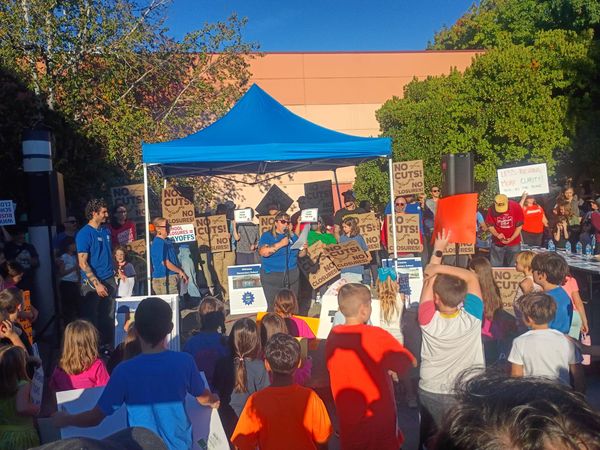
Parents and teachers have begun organizing against the IBD curriculum. At Hamilton International Middle School, where an administrator stopped the teaching of The Marrow Thieves mid-book, parents organized a petition asking that their teacher be allowed to finish teaching it. The petition, sent in March, garnered fifty-seven parent signatures. As of this writing, the petitioners have not received a response from the district.
The curriculum that Seattle Public Schools (SPS) uses for grades 6-8 is called Inquiry by Design (IBD). The district is currently in year two of a nine-year contract costing $3.84 million.
The SPS adoption of Inquiry by Design is troubling. Not only is the curriculum problematic, but so was the decision making within SPS. The ability to pay for IBD from a fund earmarked for technology was prioritized over the ability to support high-quality education.
To understand this, it is important to note that SPS’s adoption of IBD is fully digital. This means that students and teachers have access to an online portal of resources, but not to printed or tangible materials. The all-digital nature allows SPS to pay for the curriculum from its capital fund—an account flush with city levy money—instead of from its operating budget, which carries the notorious SPS structural deficit.
To ensure that the curriculum would be funded by the capital fund, SPS restricted the curriculum selection process to digital-only options from the beginning. This limitation appears to be a significant factor in how SPS ended up with such a poorly-suited curriculum.
What follows is the story of an appallingly under-structured and culturally insensitive curriculum adopted because it could be paid for from a pot of money earmarked for technology. It’s the story of decision-makers who didn’t heed teacher input, and of a school board that didn’t exercise due diligence. It’s the story of district staff who prioritize compliance over learning and reprimand teachers who try to provide rich student experiences.
Most importantly, this is a story of teachers who are exhausted by the burden of filling in the gaps and working with unengaging texts and of students who aren’t developing the skills to process complex texts and think critically.
The rest of this four-part series is a deep dive into why the seventh graders in my son’s class aren’t learning to understand a text even as long as this article, while middle schoolers at private Seattle schools are routinely assigned whole books.
It’s a story in four parts:
- The curriculum: Inquiry by Design (IBD)
- Inquiry by Design in SPS classrooms: Prioritizing standardization over learning
- The SPS adoption of Inquiry by Design: Budget games and a lack of evidence
- The future of ELA at SPS: We can do better
I hope you’ll join me, first in learning about how we got here, and then in organizing for a better ELA curriculum solution. That would look like something that meets Common Core standards, includes relevant texts, and gives teachers the flexibility to choose external texts that meet students where they are—including full books for students ready for them.
If you have a story to share—as a teacher, an administrator, a parent, or a student—I would love to hear it! I can be reached at hello@julieletchner.com.
Join me in Part 1 to learn about Inquiry by Design and why it's such a poor fit for Seattle Public Schools!
~
*To be clear: My son has read full books before, but only on his own time. This is the first time that a teacher has required him to read a full book, let alone demonstrate any comprehension of its contents.