Issue 42 – SEA and SPS Ratify the Tentative Agreement
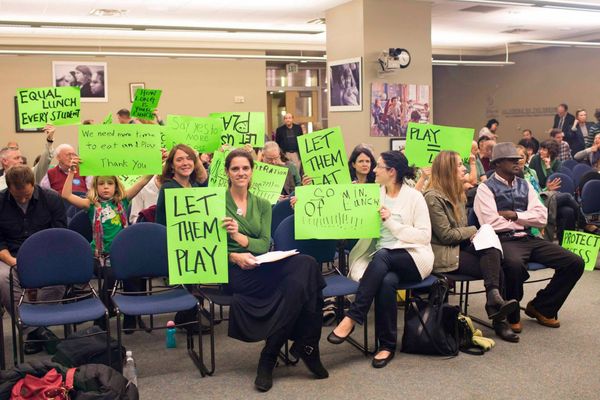
The school board discusses the agreement’s impact on finances and special education. Shuldiner defends recess cuts, while families point out wider concerns about recess – and lunch.
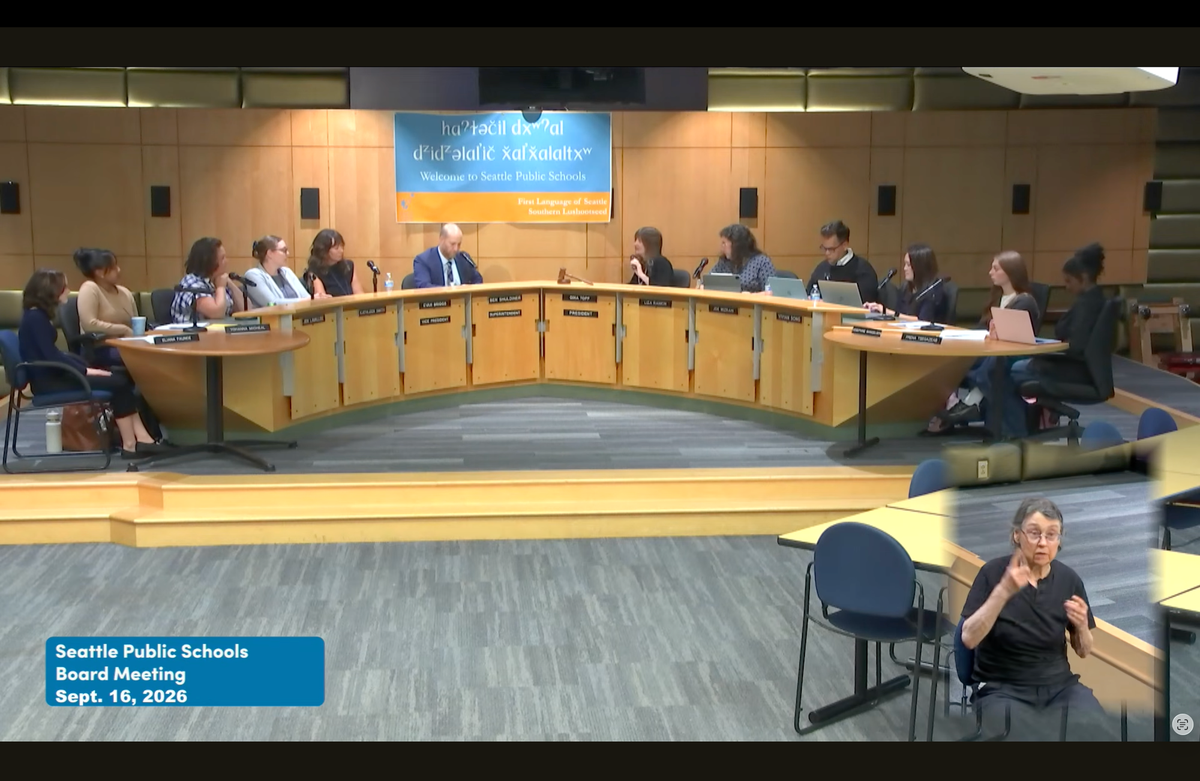
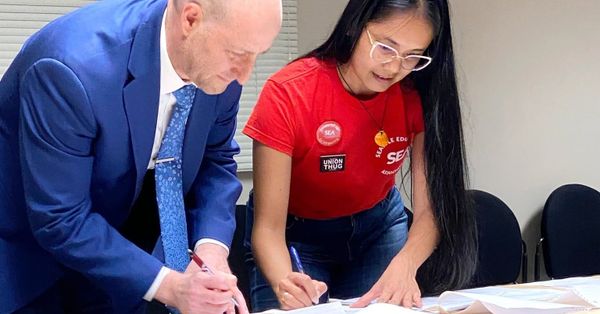
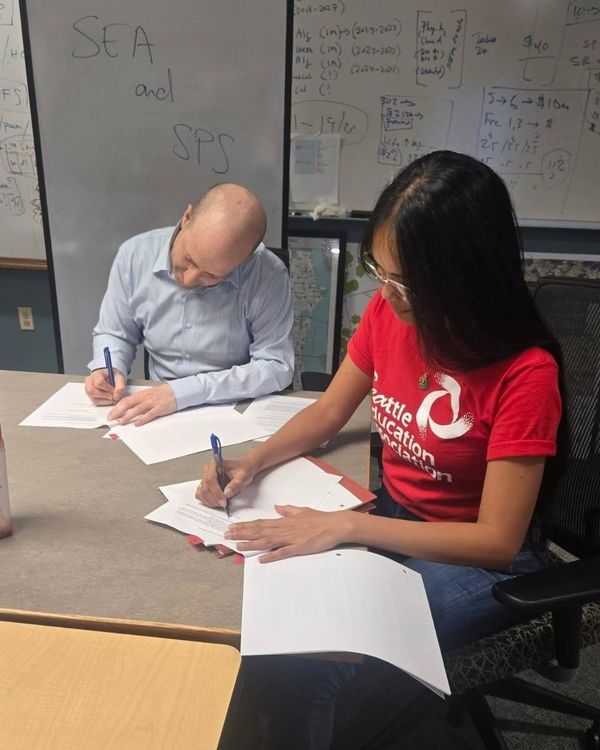
The Seattle Education Association and the Seattle Public Schools board of directors have both ratified the Tentative Agreement that was reached on September 1, averting a strike.
The board and Superintendent Ben Shuldiner had a lot to say about it at their meeting on Wednesday night, especially about the cost and about special education. Shuldiner also had a lot to say about public concerns about inadequate recess times.
Watch: YouTube
Read: Transcript (includes video & text)
Learn: Agenda and meeting materials (note new site for board meeting materials)
In this issue:
- Shuldiner Defends Recess Policy, While Families Flag Wider Concerns About Lunch
- Board Ratifies New Contract That Gives “Breathing Room” to District Finances
- Board Expresses Concerns on Special Education
Shuldiner Defends Recess Policy, While Families Flag Wider Concerns About Lunch
Superintendent Ben Shuldiner took a moment before public testimony at Wednesday’s board meeting to address community concerns about the lack of sufficient recess times – even as public frustration grows about inadequate lunch times as well.
Referring to comments he made the night before at a Magnolia Community Council meeting, Shuldiner argued that his mandate to schools to cut recess time stemmed from a desire to standardize schedules and fit in more instructional minutes:
“Our job is to make sure that our children are getting a holistic education and part of that is certainly recess, part of that is PE, part of that is lunch, but it's also of course English and math and science and social studies.”
The state does not mandate specific amounts of time for ELA and math. Shuldiner pointed out the state does have mandates for PE, but most SPS schools are probably not meeting that standard. He also pointed out that schools also need to teach the Since Time Immemorial curriculum about Native Americans, but some aren’t fitting that in either.
Shuldiner is right that there is a lot to juggle in scheduling the school day. This is no easy task. But it is notable that SPS consistently chooses to cut recess and lunch times and view them as competitors for, rather than different forms of, academic time.
Some schools in other nearby school districts, such as Lake Washington, offer more lunch and recess time, and have better academic outcomes. This should be a model for SPS. Some districts also have a longer school day.
SPS is choosing to devote increased amounts of time to some academic subjects this year, including 120 minutes for ELA. It's certainly possible more time to eat and play would do more to improve academic outcomes rather more minutes of ELA. But even if these times were seen as inflexible, one should still be able to design a daily schedule that meets student needs. It seems lunch and recess times are treated as an afterthought, rather than a priority, in SPS.
Shuldiner did not mention the research about adequate times for kids to eat and play in his comments on Wednesday.
Since we published the last issue of The Bulletin, covering cuts to recess time in some schools, a few things have become clearer. First, a lot of SPS schools were already treating the 30 minute recess requirement as a cap, rather than the floor that it was always intended to be. Lack of adequate recess time has long been a problem across SPS.
Parents and students are also raising serious and troubling concerns about the lack of adequate lunch time.
In my post on Instagram about recess times, which has nearly 40,000 views so far, most of the 200 comments were actually about lunch. Parents repeatedly pointed out their kids come home hungry with full lunchboxes because there’s not enough time to eat.
Some students who need a meal provided by the school find that it takes so long to get through the lunch line that there’s not enough time to eat it. Parents reported that kids who could benefit from the City-funded universal free school meals program are skipping it because there’s not enough time to eat it.
One parent reported that 4th graders at their school engaged in a mass protest last school year at the lack of adequate lunch time. But nothing has changed.
Hungry kids can’t learn. Unfortunately, a lot of kids are going hungry in SPS not because of poverty, but because of the district’s schedule.
This was the issue that sparked the big lunch and recess mobilization in 2014. Schools were giving 20 minutes for lunch – but because of the time it took for kids to sit down and get settled in, they were only getting 13 minutes on average of seated lunchtime, according to a 2015 study by the UW School of Public Health.
That study found this to be woefully inadequate, and recommended more time be scheduled for lunch so as to ensure 20 minutes minimum of seated lunch time. SPS refused, instead adopting a policy requiring just 20 minutes overall of scheduled lunch.
After the mobilization against short lunch times in 2014-15, many SPS schools did schedule longer lunches. But over the years schools have backslid. Many schools now once again schedule just 20 minutes for lunch, despite knowing that won’t be enough time for young kids to eat.
SPS’s dismissive approach to student lunch extends to the upper grades as well. Last year, high school students staged a mass walkout in protest against changes to their lunch schedules. SPS dug in and refused to change course.
Board policy 6705 requires 20 minutes of lunch to be scheduled. It also says that “the district will engage with students and school and community partners to receive regular feedback on the food service program.” The overarching board policy 3405, developed in response to the mass mobilization of 2014-15, states “the general public and school community will be involved in the periodic review, implementation, and update of this policy.”
It’s time for that to happen. SPS should convene a taskforce of parents, educators, and high school students to review the daily schedule and make recommendations for changes to be adopted for the 2027-28 school year. Those recommendations need to balance a range of factors, but they need to ensure 45 minutes a day of recess and at least 30 minutes scheduled for lunch.
As things stand today, years of research demonstrating that ample time for kids to eat and play are essential to their ability to learn have simply not penetrated the walls of the central office.
Board Ratifies New Contract That Gives “Breathing Room” to District Finances
After hearing public testimony and approving the consent agenda, the board turned to their only action item of the night: ratification of the Tentative Agreement with SEA. After discussion, the board approved it by a vote of 5-2, with board members Liza Rankin and Evan Briggs voting no.
SEA members had ratified the contract the night before after completion of an online vote.
In response to board members’ questions about the financial aspects of the contract, Shuldiner argued it was something SPS could afford, and worked to tamp down concerns about the contract’s affordability he had stoked earlier when telling the public “we’re broke.”
He pointed out that the budget directors adopted last month included funding a cost of living increase for educators, and that the amount agreed to in the contract was within the amount that was budgeted. “What I feel very comfortable about with this contract is that it gives us a year of breathing room,” he said.
Shuldiner went on to lay out his thinking about district finances, setting out three steps over the next three years.
“This allows us, especially that first year of COLA and not doing a lot of the big changes, to get our feet back underneath us.
And then by year two, hopefully we've structured the district in a way that some of our really out of step formula we can address.
And then my hope is that over the course of the three years, we all as a city of Seattle go to Olympia and say, hey, you know, you gotta fund us correctly.”
Shuldiner has routinely slammed the state’s school funding formula as being inadequate. On Wednesday night he noted that SPS spends 77% more in transportation than the state gives, “because the formulas they use for Seattle are the same formulas for Walla Walla.”
Does that second step refer to possible school closures? We shall see. It is worth keeping in mind that nearly 20 years of research has shown closing schools does not save money.
Director Joe Mizrahi summed it up well when he asked: “It seems to me like what you were going for was solving for fiscal stability but with a collaborative approach and finding a way to do that with our labor partners and with the union.”
Shuldiner agreed with that, and it certainly appears that’s what the new Collective Bargaining Agreement achieves.
Board Expresses Concerns on Special Education
Board members also focused on what the new contract meant for special education services. Many of them expressed disappointment that it did not immediately implement the controversial changes to special education that SPS had proposed during bargaining.
These proposed changes had split parents, educators, and community members. That split was particularly evident among parents of students who qualify for special education services. Some of them strongly supported SPS’s proposals, seeing in them a long overdue fix to services that were failing to meet their students’ needs. Others strongly opposed the proposals, concerned that the changes would further worsen special education services in SPS just to save money.
It was always unlikely that SPS would be able to unilaterally impose these changes, especially during bargaining. Previous efforts at reforms had stalled out as talks between SEA and SPS went nowhere. As Shuldiner put it on Wednesday night, “there was a conversation about a conversation, and it was a conversation, and it didn't actually lead to outcomes. With this [contract], we actually are tying it to an actual pilot with actual actions.”
The new contract creates a clear and specific plan – the Special Education Partnership Initiative (SEPI) – to hash out what reforms could look like, based on research and community consultation. The following four screenshots from the Tentative Agreement (starting on page 838) lay out the details of how SEPI will work:
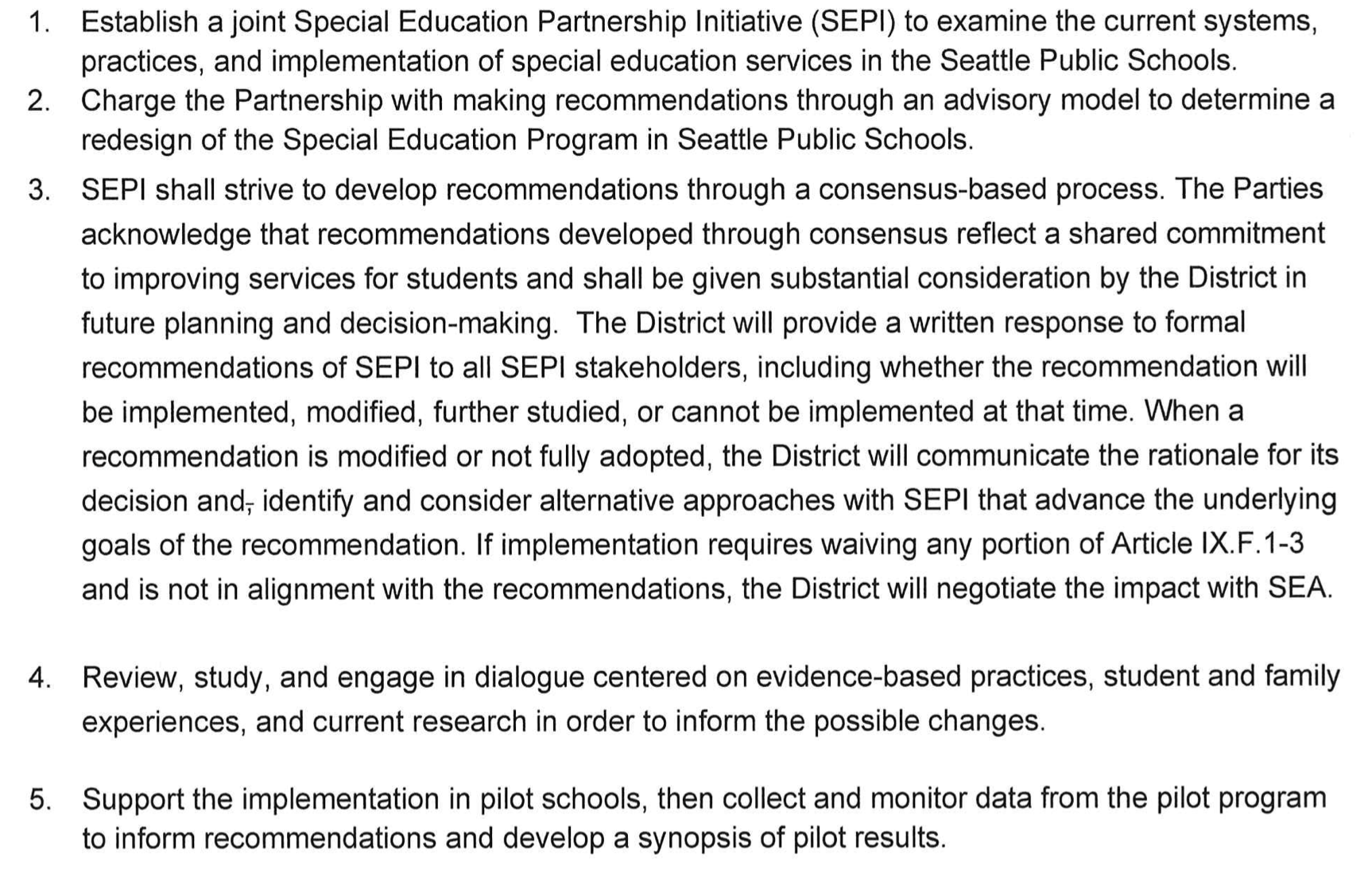
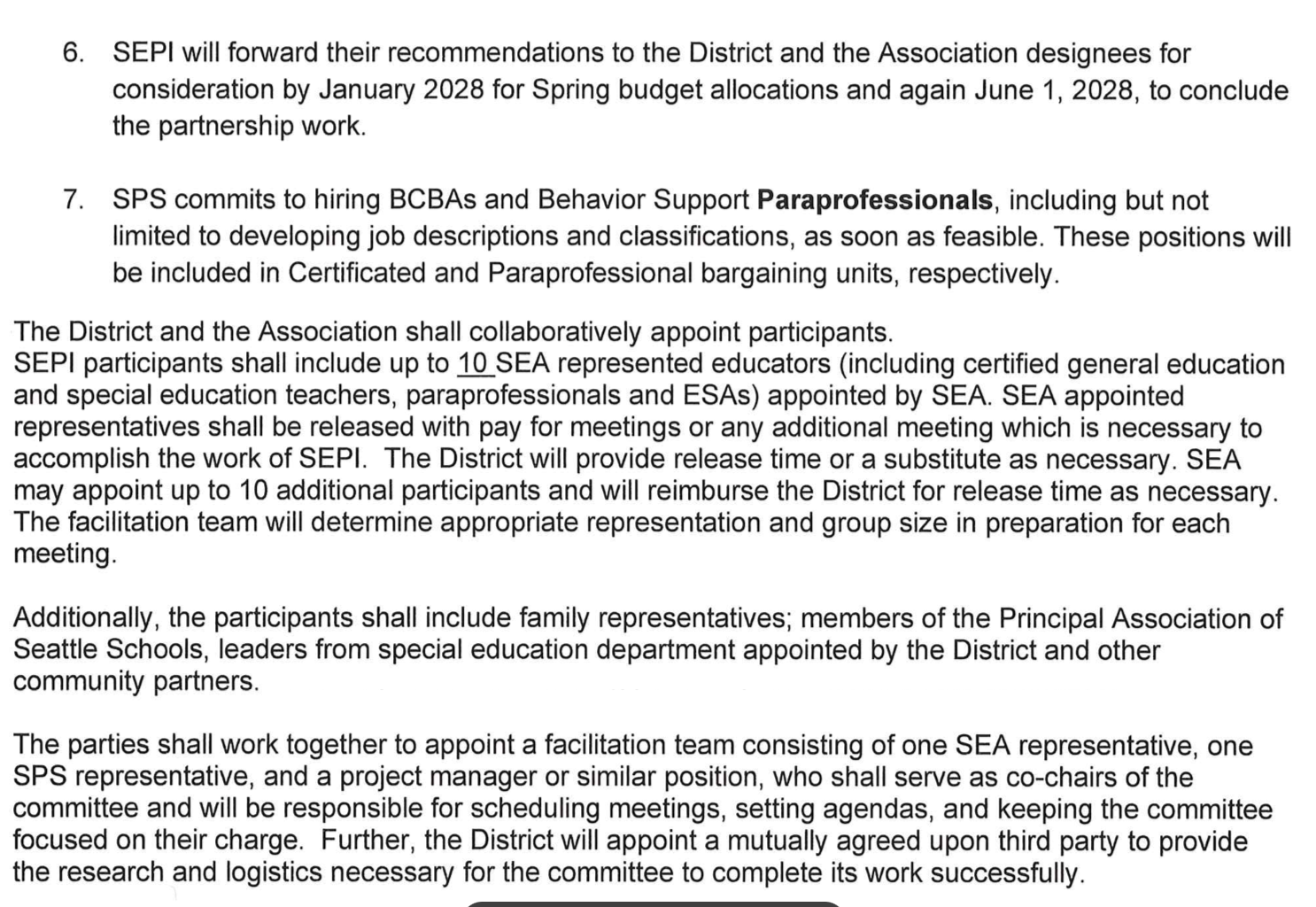
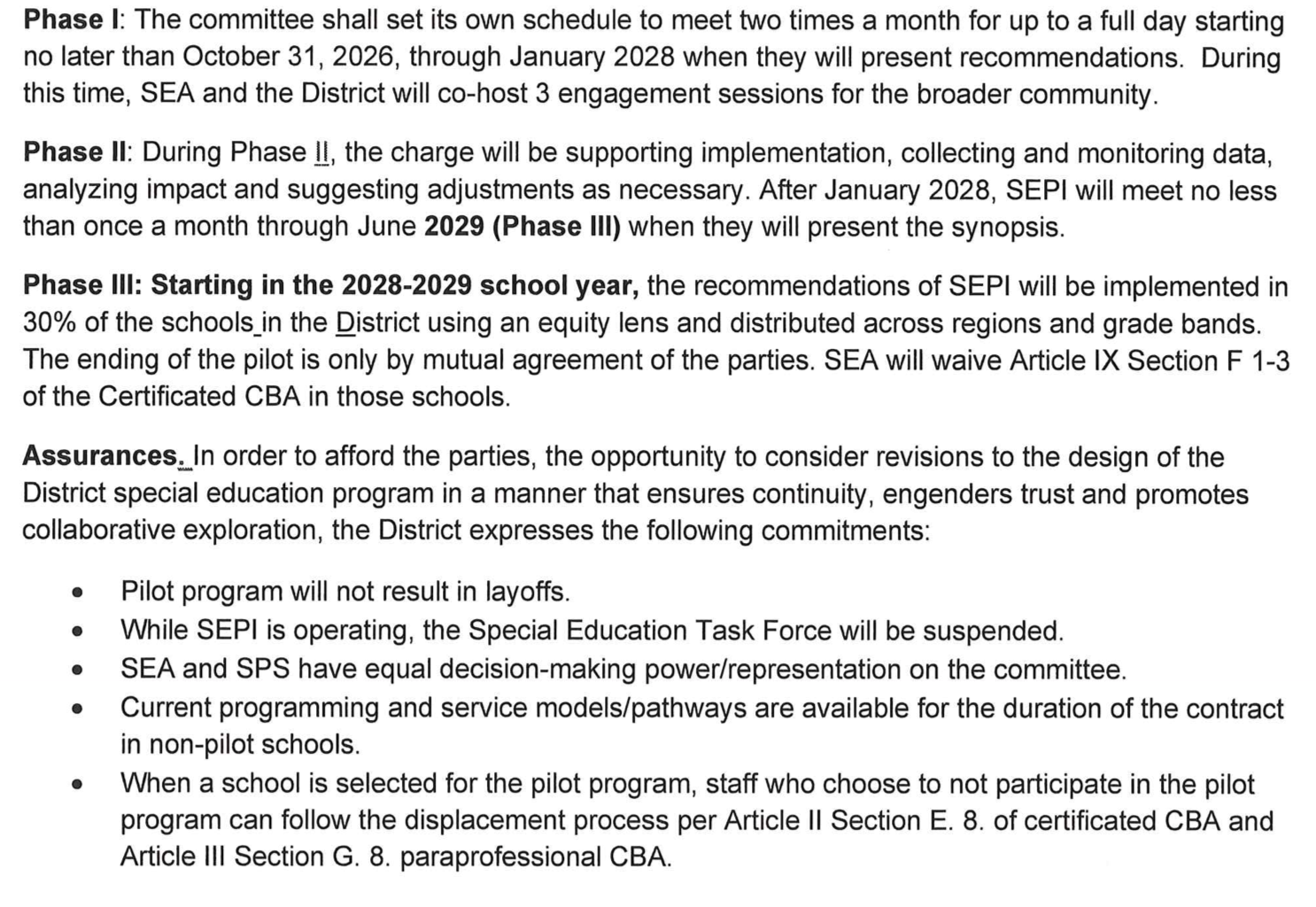
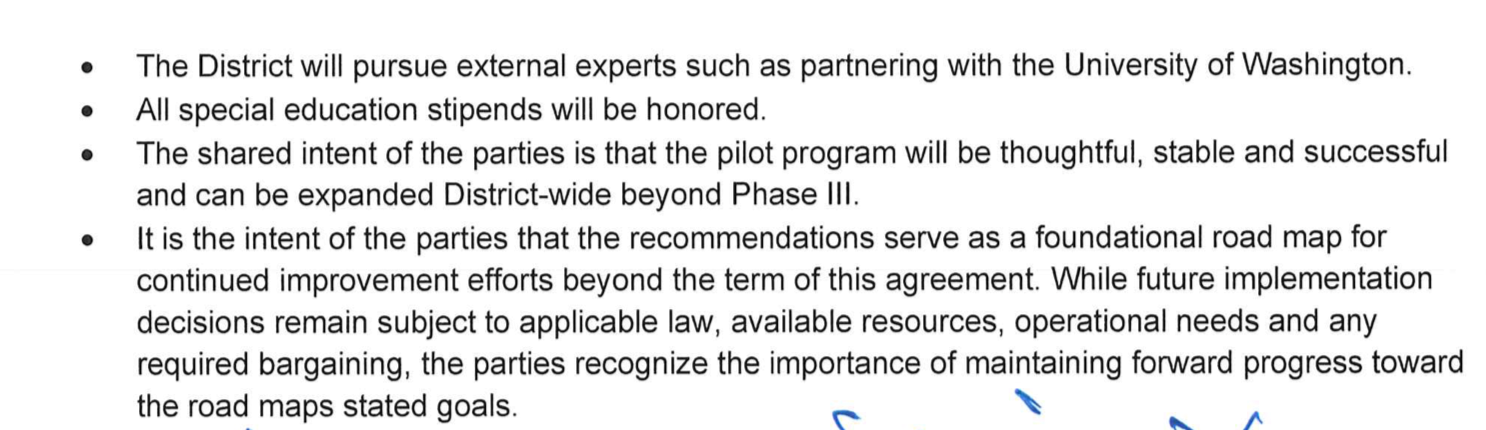
It provides a specific timeline and sets up a pilot program for 2028-29 to test out reforms, with the intent of adopting a final change districtwide in the next contract negotiation in 2029. That may be too long for some. But it ensures all sides are heard, considered, and hopefully, brought to consensus about the path forward.
Shuldiner felt this was a good outcome, and said at the board meeting it shows “SEA and SPS now really trust each other.” He made it clear he believes SPS and SEA are in strong agreement about what is needed for special education, and recognized that educators are clearly interested in doing right by students.
Referring to the bargaining with SEA, he said “we all believe that we want kids to be served in the closest neighborhood school that they want to go to.” He added “we wanted to make sure that individual kids were served with the things that they need, not just being treated as one of a classification. That's something SEA's been public about, it's something we've been public about, and I think that that pilot is going to speak to that.”
Director Rankin had a different view, and spoke out against these aspects of the Tentative Agreement.
She revealed that “I wanted to vote no” on the 2022 Tentative Agreement “because the plan of solvency didn't make any sense and I was really concerned about special education. I was sold a bill of goods and am embarrassed that I agreed to look collegial and vote yes so that it would look good for everybody.”
Rankin then offered strong but unfair criticism of educators and of parents who took time to email the board with their concerns about SPS’s proposed changes to special education:
“What was really, really hard was to see the same weaponization and othering of students with disabilities being used for leverage in a bargaining that's about adult working conditions.
It is so hurtful for, and the emails that we got about people concerned with special education, those were not parents of children in those programs.
They were parents who are afraid of those children and teachers who are afraid of those children and parents like me who have those children and know that you don't want us there.”
While we don’t know the contents of every email directors received, these comments mischaracterize, at best, most emails they got. Many of the people who sent emails with concerns to the superintendent and the school board, including those sent through the SPSforKids.org website, are themselves parents or family members of students receiving special education services. It’s also true that some who sent emails are not. But everyone gets a voice.
Either way, most of them spoke up out of genuine concern about the potential harm the district’s proposed reforms could cause, including to students receiving special education services. They looked at what the district proposed and concluded it was a bad idea. They did not deserve to be dismissed and criticized like this.
Given the deep divides about the district’s proposed reforms, including among parents of special education students, SPS leaders should be working to reconcile these views and find a way forward that works for students.
The SEPI pilot program set up in the contract does that, and could be an excellent model for how collaboration and partnership can be a basis for reforms to help students – rather than the usual top-down approach, which hasn’t produced good outcomes.
Rankin's comments instead contained criticism of the educators who make up SEA and its bargaining team, when she spoke of “weaponization and othering of students with disabilities being used for leverage in a bargaining that's about adult working conditions.”
These are educators who work with those students every single day and care deeply about them. Rankin instead invoked a timeworn trope used by corporate education reformers and anti-union voices, claiming that educators care only about themselves as adults, and not the students they serve, when bargaining.
(Rankin was endorsed by SEA in her first run for school board in 2019, but not for her reelection bid in 2023.)
It’s not just about special education. For years we’ve seen district leaders attack members of the public from the dais for speaking out about district policies, or trying to find reasons to discredit community voices. In this case, Rankin also impugned the district’s educators. We’ve gotten sadly used to it in SPS, but you don’t see this kind of thing in most other elected bodies.
It is long past time for that to fade away as part of SPS culture, in favor of a more collaborative and respectful approach to partnership on the important topics that impact our children’s education. That’s especially important when there is strong disagreement about what policies to pursue. Unfortunately, this board meeting showed we still have some way to go.
Rankin was particularly unhappy about language in previous contracts regarding educator interactions with students:
“Our policy on isolation and restraint is centered around providing safe environments for children and says that physical intervention is a last resort when there is a serious risk of imminent harm.
That means you do not grab children unless there's something really serious about to happen and there's no other option.
We set that policy. That policy was supported by the broader community and by a lot of educators.
The contract says teachers can grab kids if they feel like it. Not in those words, but so our policy doesn't matter.”
Rankin is misinterpreting what the contract says. Neither the 2022 nor the new 2026 Collective Bargaining Agreement (CBA) allow teachers to “grab kids if they feel like it.”
Board policy allows restraint “in situations when there is an imminent likelihood of serious bodily harm to a person.”
The most recent CBA from 2022 does not address restraint or isolation. It does have provisions that address physical interactions with students, and this may be related to Rankin's concerns.
Article VII, Section C of that contract (bottom of page 69 of this document) addresses “Protection of Employees, Students, and Property.” Subsection 1 is titled “Preservation of Order in the Schools” that allows an employee to “use force, but no more force than is necessary” in several situations that are defined more broadly than board policy:
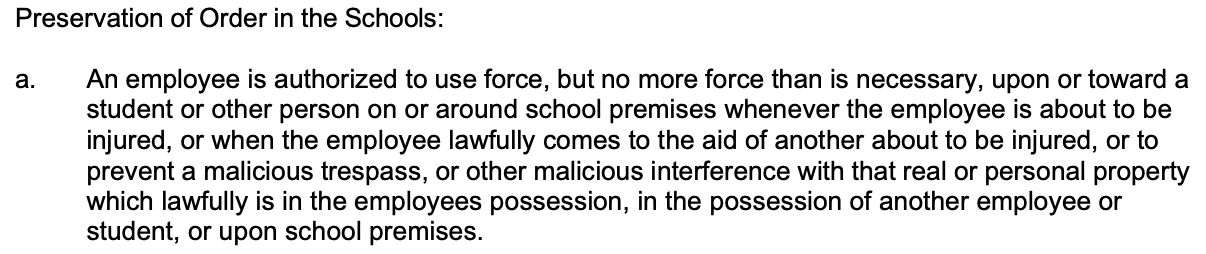
But this does not justify Rankin’s assertion that “the contract says teachers can grab kids if they feel like it.” Even her qualifier, “Not in those words, but so our policy doesn't matter,” isn’t really accurate.
There is a difference between the board policy and the contract. The contract language is clearly looking more broadly at issues of safety in the classroom and in the school building, and does not appear to have been written specifically about special education. Still, it can also be applied to some situations involving students receiving special education services, which could be the root issue here.
The contract language does not appear intended to get around board policy. Instead, two different things are colliding. Educators reasonably want clarity about when they can use force. Students and their families reasonably want limits on that use, especially when special education services are involved. This clearly seems like an issue to resolve through partnership, rather than attacks from the dais.
This has a particular salience right now, as SEA president and special education teacher Ibijoke Idowu has been on leave since December in response to allegations of physical assault against a student. An SPS investigation found it was “more likely than not” that she bruised a student receiving special education services in her classroom.
It would be good to make board policy and the contract consistent, and it should be possible to produce language that meets everyone’s needs. But Rankin’s approach, attacking educators and claiming they’re not advocating for student needs, won’t achieve it.
Rankin did not present her own preferred solution on Wednesday night, either to this question of teacher-student interactions or on special education services more broadly. The overall direction of her comments suggested she’d like to impose a solution of some kind on everyone – and especially on teachers. She kept arguing that the board represents “the community” but is limited by a CBA – clearly not recognizing that “the community” also includes educators and the union they organized to represent them.
Seattle is a strongly pro-union city in a strongly pro-union state. Seattleites are particularly supportive of their teachers. Any approach to running the school district that does not see educators and SEA as partners who also want the best for students is doomed to fail.
Thankfully, cooler heads can still prevail. Shuldiner’s comments were constructive. Some on the board spoke similarly. In her closing remarks, Board President Gina Topp praised both SEA and SPS leaders while acknowledging the agreement isn’t perfect:
“Our educators are the people doing the work every single day and we need to make sure that they are supported and compensated so they can do their work well while doing our primary duty of delivering our services to students, educating kids, making sure to provide them access for what they're going to do next all at the same time of being fiscally responsible.
So I think all of those things are happening at once and that is a tight rope to walk and I don't think that this agreement is 100% perfect but I think it takes a lot of steps in positive directions and I appreciate both SEA and SPS Superintendent Shuldner, you and your staff, getting us to this point.”
One hopes that spirit of collaboration is what will prevail going forward, for the sake of all our kids.